
book review · books · fiction · reading · University

Book Review

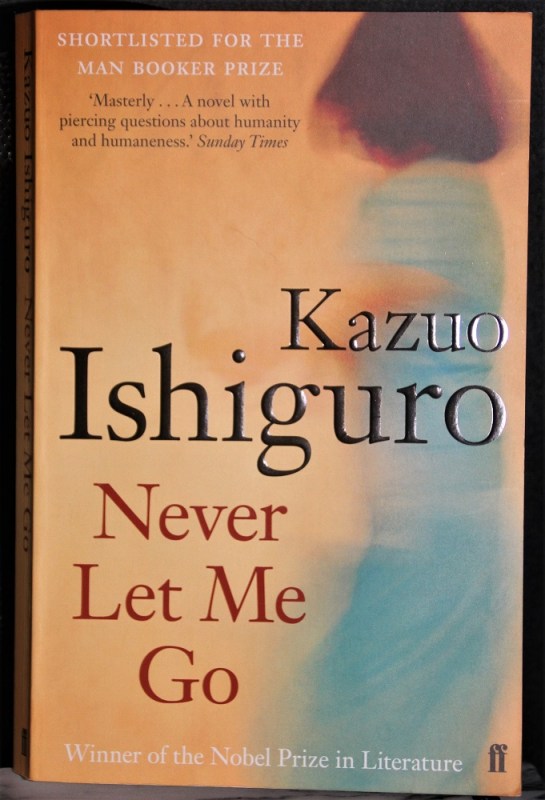
Today the weather has been dismal, all-day-long. Nothing but rain, rain, and more rain. Oh, and mist, so there’s no Mount Warning visible to take a photo of. So today, I will talk about a novel I have just finished reading – Never Let Me Go.

The first required reading for one of my Semester 1 units, Never Let Me Go by Kazuo Ishiguro, is a novel I had never heard of, nor did I recognise the name of the author. The blurb describes the novel as being about a group of school children and “the fragility of life,” which really doesn’t give away much at all, so I read this book without having any preconceived ideas.

This morning after I’d finished reading the book, I felt quite overwhelmed by the depth of emotion Ishiguro conveyed. Never Let Me Go is not a genre of book I am usually drawn to. Even defining the genre is a challenge, but I think I will describe it as speculative dystopian sci-fi, with a twist.

Here is the review I wrote for Goodreads

“Someone who reviewed Never Let Me Go (on Goodreads) advised prospective readers to avoid reading any information or reviews on the novel, therefore they chose not to say anything about the novel’s content. Their five star rating speaks for itself.

I reiterate this reviewer’s advice. This is a novel best read from a place of relative ignorance. That’s how I read it, and discovered that once past the confusing first couple of pages at the beginning, the story unfolds beautiful as the first-person narrator, Kathy H., reveals her tale. At surface level, the story appears to describe a dystopian world, yet a message of hope can’t help but shine through the overwhelming narrative.

Never Let Me Go is an unforgettable novel containing strong themes of love, trust, hope, commitment and acceptance, a novel that will leave a lasting impression on every reader.”

This week, Never Let Me Go is the topic of discussion for one of my units, and I’m looking forward to hearing what other people who have read the novel have to say about it. And if you haven’t read this book, I highly recommend it.


book review · books · fiction · reading

Book Review – The Sewing Machine.


When my blog-buddy Nicki at the Secret Library Book Blog posted that she intended reading The Sewing Machine by Natalie Fergie, it reminded me that I wrote a review of the book last year for a university assignment. When reading through the review today I had to make a few changes to remove evidence of it once having been an assignment, but I’ve left the basics intact.

******

There’s a great deal to like about Natalie Fergie’s debut historical fiction novel The Sewing Machine. The inter-generational weaving of lives, and the social context of various time periods intertwining events spanning over one-hundred years form a complex narrative of intrigue.

In March 1911, Jean and her fiancé Donald, both workers at the Singer sewing machine factory in Clydebank Scotland, become embroiled in a strike at the factory. When Donald loses his job, the couple relocate to Edinburgh, where the story begins to weave its way through several fateful events in the lives of four generations of two families.

The catalyst, a message written by Jean and wrapped around a bobbin before she left the Singer factory is discovered by Kathleen after she purchases a new machine. This message, and the part the machine plays in the lives of each owner as it passes through the generations remains the focus of the story.

The last owner of the sewing machine, Fred, who we meet in 2016, is an unemployed blogger. He is the great-grandson of Kathleen, and inherits the sewing machine as part of his grandparent’s estate. After his fateful meeting with the great-granddaughter of Jean, the two descendants unravel the mystery of the message written in 1911.

I have just one criticism to make regarding the structure of The Sewing Machine. As captivating as the story is, I found the emotional connection between character and reader hindered by the introduction of three protagonists within the first nineteen pages, with each living in a different time period. In the beginning, the plot was difficult to follow. Further preventing intimacy with each protagonist, little is mentioned about their appearance. In an interview with Anne Bonny, Fergie claims she “painted each character’s appearance with a light brush” to enable the reader to form a picture of the person through their personality, avoiding any “long-winded physical descriptions”.

Unfortunately, descriptions of a nurse dressing for her shift on page 178 are long-winded. The paragraph begins with “she assembled the uniform in stages, fixing the collar on to the dress with three studs”. After a detailed fifteen-line commentary of a nurse dressing, complete with accessories, the nurse “gathered her red woolen cloak around her and set off, past the discreetly signed mortuary and up the steps to the long surgical corridor”. With similar detailed narrative of the characters lacking, I formed mental images of faceless people while reading.

At times, it is difficult to foresee how all elements of the story will come together. By the conclusion, however, the connection of every significant event occurring within the two families over one-hundred-and-five years is cleverly explained.

I read The Sewing Machine over four days during April 2018 and my rating for the book on Goodreads is four stars.