“We are all visitors to this time, this place. We are just passing through. Our purpose here is to observe, to learn, to grow, to love… and then we return home.” ~ Aboriginal quote.
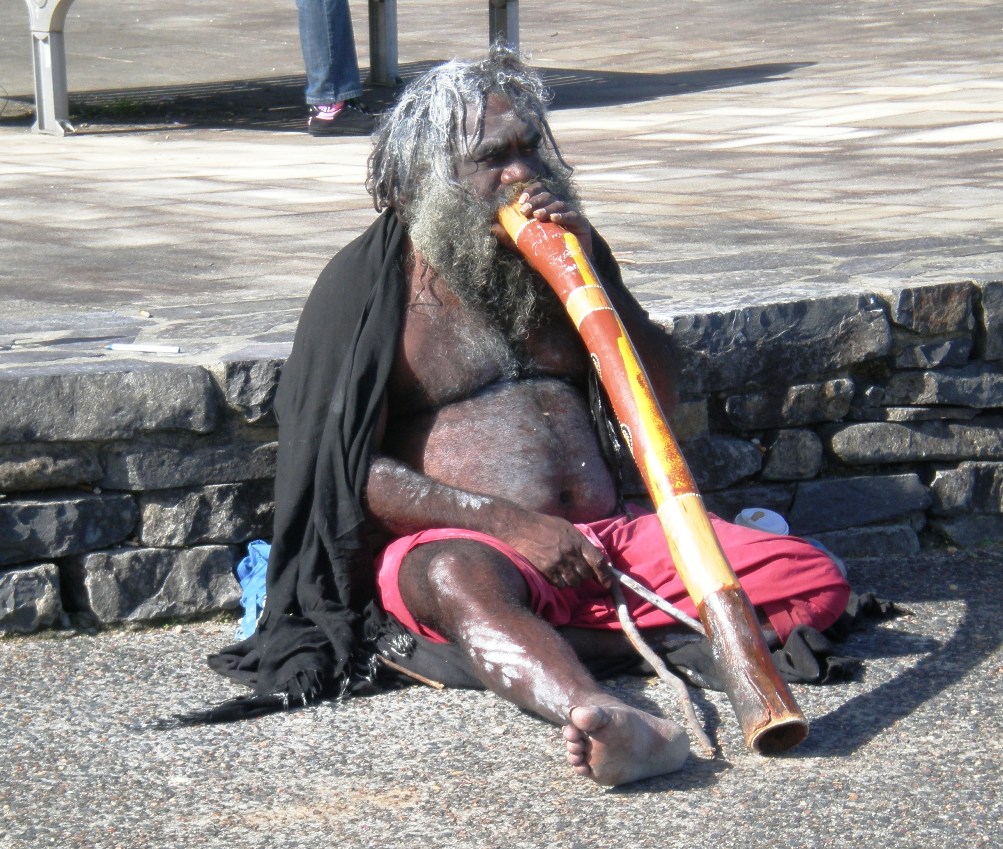
The sound of the didgeridoo being played, as the throbbing sounds reverberated around and around the walls of the Jamieson Valley at Echo Point in Katoomba, New South Wales, is perhaps one of the most haunting sounds I have ever heard during my lifetime.
I cannot imagine anything more iconic in Australian culture than the didgeridoo, or yidaki, as it is known by the Yolngu Indigenous Australians from Arnhem Land in the Northern Territory.
When I visited The Three Sisters at Echo Point in the New South Wales Blue Mountains eighteen months ago I took the photo above, and tonight, whilst searching for a link to add here so you could all hear the magical sounds of the didgeridoo, I just happened to find this very same man on YouTube, playing the didgeridoo at Echo Point!!
Click on the link and listen as you read, it will open in a new window, and here also is a photo I took of The Three Sisters while I was there, to help your imagination along. Of course it never is the same as actually being there and experiencing the sounds, but you should see and hear some of what totally enraptured me.
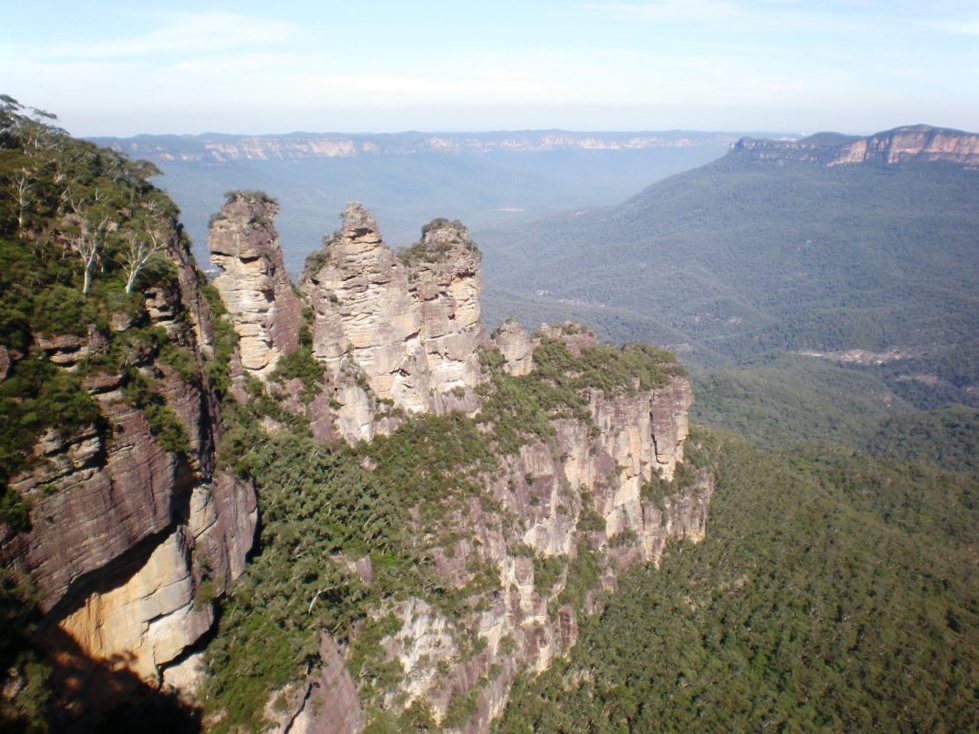
If you watch the YouTube video it shows some scenes around Echo Point as well.
Just before Christmas arrived I spent a week in Noosa, Queensland and whilst there I visited the Eumundi Markets. Maybe I visited the markets more than once. Okay, I went to Eumundi for all three days that the markets were open during the week I was there!
The attraction may have been the atmosphere. It could also have been the old-fashioned ginger beer (a non alcoholic ginger flavoured drink we have here in Australia). Kenn may have also played a big part in why I felt the need to return.

This photo shows my son on my second visit to Kenn’s shop. I felt sure that Adam would enjoy learning how to play the didgeridoo, being musically inclined, and I told Kenn about Adam on my first visit there. (Adam was with his brother and father that day, the boys had gone fishing.) He offered to teach Adam a thing or three about the techniques required to play the instrument (as opposed to blowing into the hollow piece of wood like a trumpet!)
On my next visit, with Adam in tow, we must have spent at least an hour with Kenn, Adam trying out various didgeridoo’s, under Kenn’s instruction. Whilst Adam put into practice what his teacher was telling him to do, Kenn and I chatted.
Kenn himself is a healer and a mystic, qualities inherited from his Aboriginal ancestors. I felt saddened to learn that there are only a few full-blooded Australian Aboriginals left now, compared to years gone by. When an Aboriginal chooses to marry outside of his race, he must leave the tribe. And many have decided to leave, choosing love over heritage.
The didgeridoo is traditionally played at ceremonial events by the men of the tribe only. Women do not play at these events, although they are permitted to play at other times.
Adam soon worked out the breathing style required to play the didgeridoo and amazed Kenn by how quickly he had picked up on actually producing something similar to the correct sound the instrument should make! Adam had a favourite didgeridoo, which he wanted me to buy for him there and then, but I told him he would have to save his money and buy it on our next visit to Noosa.
Adam returned home the following day with his father and I stayed at Noosa a few days longer, during which time I paid my third visit to Kenn. I bought Adam’s favourite didgeridoo, to give to him for Christmas.

Kenn told Adam he had taught him all he could for now. The rest would be up to Adam, to remember what he had been taught, then practice, practice and practice! That’s all there is to it!
Next time we visit Eumundi we will visit Kenn again, to talk, to learn and then learn some more.


 In My World