
The usual rain expected at this time of year has made an appearance during the last two or three weeks. In the subtropics, this is our wettest time of the year – it is also when the combination of the heat of summer approaching and regular rainfall creates high humidity.
And what annoying little insect loves the humidity? Mosquitoes!
My garden is fully responsible for my recent absence from blogging. Every day, I hear the collective murmurings of the leaves, the flowers, the trees, and of course, the weeds, beckoning me to join them. And why argue with them? It’s exactly where I want to be.
So now the summer rain is here – and the mosquitoes – I have been unwillingly forced indoors, several times, although I don’t mind staying outdoors if the rain isn’t too heavy.

From the windows inside my home, I have been admiring all of the plants I have been tending during the cooler months of winter now bursting into bloom. My roses are simply stunning, and clearly appreciate the extra care I have been giving them since completing my online university degree and abandoning my computer. I find that roses grow well in the subtropics. They are hardy plants, with the worst problems being aphids, which are easily removed by hand, and sometimes black spots on the leaves caused by too much rain. New leaves grow fast once the affected leaves have been removed.
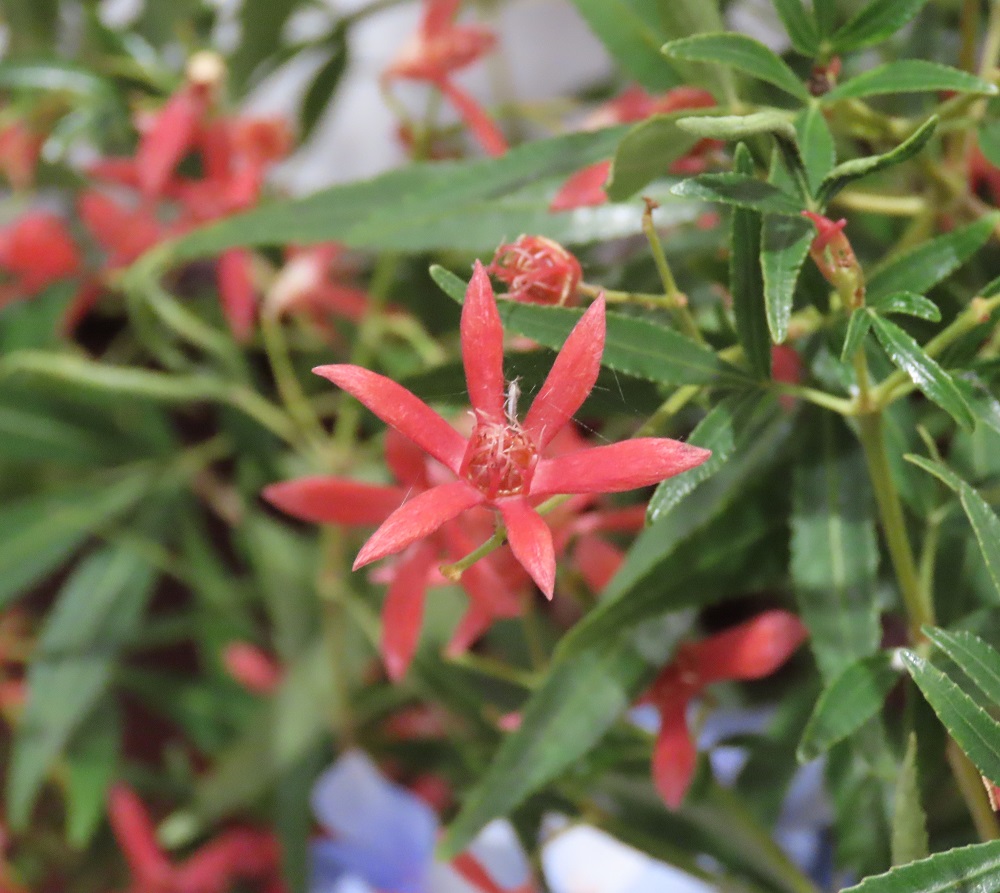
Today, however, I am sharing what I believe is a stunning combination of flowers and colours when together in a vase – agapanthus, hydrangeas, and New South Wales Christmas bush.

The trio is a sentimental favourite of mine. Many moons ago when I lived in Sydney’s temperate climate zone, I grew all three in my garden, and with the climate south of here being slightly cooler than where I now live, they were all blooming beautifully at Christmas time. So every year on Christmas Eve, I would bring cuttings and flowers of all the plants indoors, enough to fill several large vases, to decorate the house for Christmas.
Here in the subtropics, the hydrangeas are in flower for many months. By Christmas time, however, the agapanthus looks bedraggled and the red stars of the Christmas bush have faded. My lovely trio simply always arrives one month too early for me to decorate the house for Christmas with them here in the subtropics, so I have to enjoy their indoor display prior to Christmas.

With being an Australian native plant, the New South Wales Christmas bush may be unfamiliar to people from other countries. New South Wales is the state where I live, so I must admit to having a soft spot for this beautiful small tree. In fact, during winter, I purchased a second tree. It has grown to around a metre tall since becoming a new resident in my garden and I expect its full height will be around four metres tall. I have taken the cuttings today from my older tree.
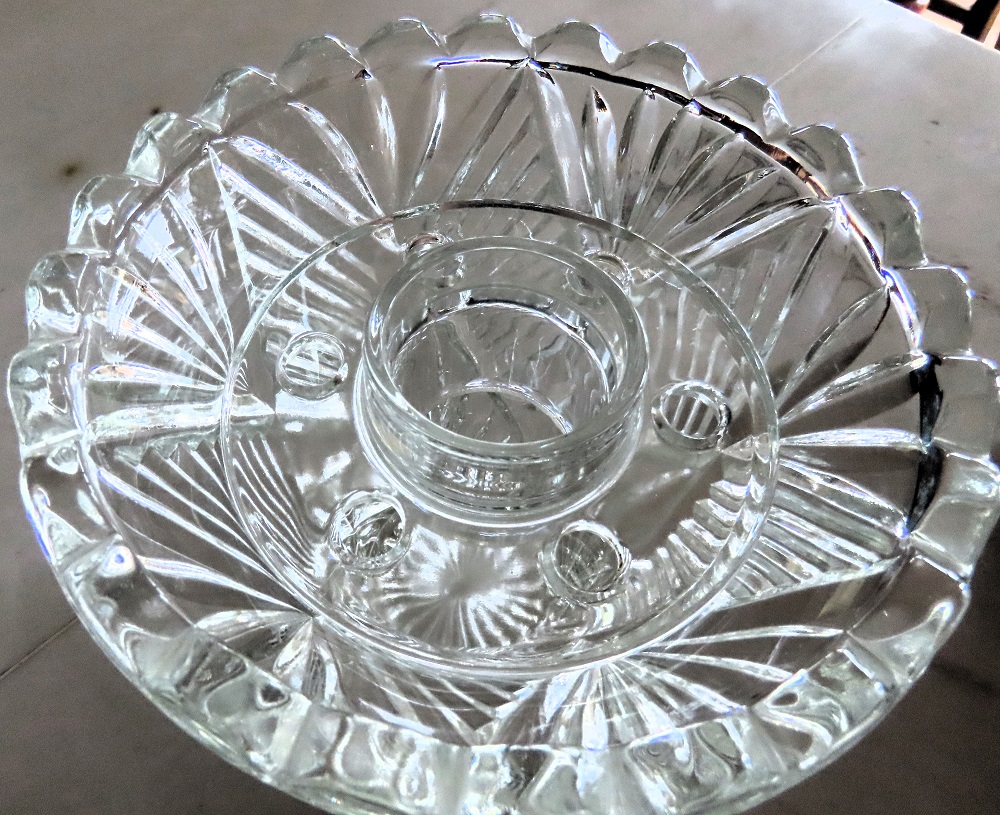
I chose my oldest crystal vase to arrange the display in an upright position. The centre of the vase can be removed, but I prefer to leave it in place when displaying tall flowers, such as the agapanthus, to give them stability. This vase is a particular favourite, inherited from my mother. It is about as old as me and a vase that I treasure.
Given the wet weather today, which is preventing me from spending the day outdoors, I decided to bring some of my garden indoors. And being Monday, it seems appropriate to add my early Christmas stunners as a contribution to “In a Vase on Monday”, hosted weekly by Cathy at Rambling in the Garden. Thank you, Cathy, for the inspiration to share some of my garden, indoors, on a wet, almost summer’s day. 🙂

 In My World
I believe those are some of the most beautiful flowers I have ever seen. I can only imagine what the whole garden looks like – paradise! XOXO
LikeLiked by 1 person
Thank you so much, Stacy. 🙂
I have been doing a lot of work in my garden during the last year, so when the weather picks up I will take some photos to share. ❤
LikeLiked by 1 person
Can’t wait to see them!
LikeLiked by 1 person
Such a beautiful vintage vase, and well-filled I might add! 🩷
LikeLiked by 1 person
Thank you, Eliza. 🙂
I could have filled ten vases with the number of hydrangeas I have this year! They are having a great year so far, although the heat may bother them over the next month or two.
LikeLiked by 1 person
I love your bouquet, and the beautiful vase that holds it!
LikeLiked by 1 person
Thank you, Carol. I am happy to hear you enjoyed my vase and the flowers. 🙂
LikeLike
It’s fun for me to imagine living where hydrangeas are in bloom for most of the year. 🙂 And to have so many beautiful flowers available for holiday decorating! Your vintage vase and colorful arrangement are lovely.
LikeLiked by 1 person
Hello Barbara. 🙂
During the summer, I long for snow! There are many advantages to living in a warmer climate though, such as hydrangeas constantly in bloom. I think they are dormant for only around two months of the year.
LikeLiked by 1 person
Enjoy your pre-Christmas trip down memory lane! Although I grow a lot of Australian plants in my area of coastal Southern California, I’m not familiar with your Ceratopetalum gummiferum but I love it. Maybe the shrub will migrate here one day…I always love seeing Agapanthus, which does grow here, as well as hydrangeas, although I’ve given them up as I consider them too thirsty for our drought-prone landscape.
LikeLiked by 1 person
Wouldn’t that be great if the NSW Christmas bush was available elsewhere? It’s drought tolerant, as are most – if not all – native Australian plants. They have to be drought tolerent to survive in most parts of this country. We have high rainfall where I live, usually between 3,000 to 4,000 mm every year, so I am very fortunate with my constant supply of water from Mother Nature. 🙂
Thank you for dropping by! 🙂
LikeLike
They are wonderful Joanne! I don’t think I have ever seen such pretty Agapanthus – such big flower heads! I wasn’t familiar with the Christmas bush – interesting to learn about new plants. And I love the vintage vase. A removable insert is a good idea, protecting the vase from water stains I presume.
LikeLiked by 1 person
Thank you, Cathy! We are fortunate enough to have extremely fertile soil here, so most plants grow well – and large – if they can cope with the summer heat. I have recently planted more Australian native plants, so as they grow, I will share photos; I know how much I enjoy learning about, and seeing, cold climate plants that I haven’t seen before. 🙂
LikeLike
Lovely vase, Christmas is welcome every day in my house.
LikeLiked by 1 person
Oh yes, it’s a very special time of year. ❤
LikeLiked by 1 person
It has been so interesting to read about your location and climate and how plants grow in New South Wales – has your weather been rather different this year too, like many other parts of the world? The blooms you have shared do look stunning together, and it is a shame you won’t have them for your Christmas displays …although you will have your roses, I guess! I was interested to read about how quickly new foliage grows if you you remove signs of blackspot, and wonder if I could get in the routine of removing the affected foliage earlier in the year…
LikeLiked by 1 person
Our climate remains consistent overall, Cathy. While working on my BA, I also completed a Diploma of Sustainable Living in 2022 and one assignment task was to compare the weather of a group of five consecutive years during the past 50 years with the most recent five years. I chose the early 1970s to compare our recent weather with, as it was the most distant in the required period to compare. The maximum and minimum temperatures have only increased by a couple of degrees, while the rainfall was the same to within 70mm less compared to 50 years ago. Our average rainfall is between 3,000 to 4,000ml per year, so 70ml is virtually nothing. I found the task incredibly interesting, included more information than required, and received a high distinction for the assignment, so it was good news on all counts.
The black spot on my roses is an ongoing issue. This year in particular I have been trying to remove all offending foliage as soon as it appears and I believe I am getting on top of it! I’ll let you how it goes during the summer months.
LikeLike
I have always been interested in weather, Joanne, so enjoyed reading this – well done on your distinction! I agree that your 70mm variation is negligible when compared with your overall rainfall, and from my own amateur recirds I know how much iur rainfall can vary from year to year. Temperature, I suppose, is a different sort of variable, as 50 years is a tiny length of time in the overall scheme of things which makes 1-2 degrees more significant. We are better at understanding climate and weather these days, but predictions are still predictions, especially where weather is concerned
LikeLiked by 1 person
Ah what a lovely old vase. Your arrangement is beautiful and the height sure does give a layered effect. I’m not familiar with the Christmas bush.. it sure adds a nice pop of red 😊
LikeLiked by 1 person
Thank you, Julie. 🙂
I don’t know if you can see it, but the hydrangea layer looks to me like a ballerina tutu!
LikeLiked by 1 person