A Week of Flowers is hosted by Cathy at Words and Herbs.
A Week of Flowers is hosted by Cathy at Words and Herbs.

For Day 5 of A Week of Flowers, hosted by Cathy at Words and Herbs, I am sharing photos of some native Australian plants growing in my garden, along with two other plants which, although not natives, blend perfectly with their dainty features.
Most Australian natives are drought-tolerant plants, they have to be to survive our often harsh climate conditions. We are fortunate in our subtropical zone to have a high annual rainfall compared to other areas of the country; however, all plants suffer during drought. Low water requirements do not mean no water is required!
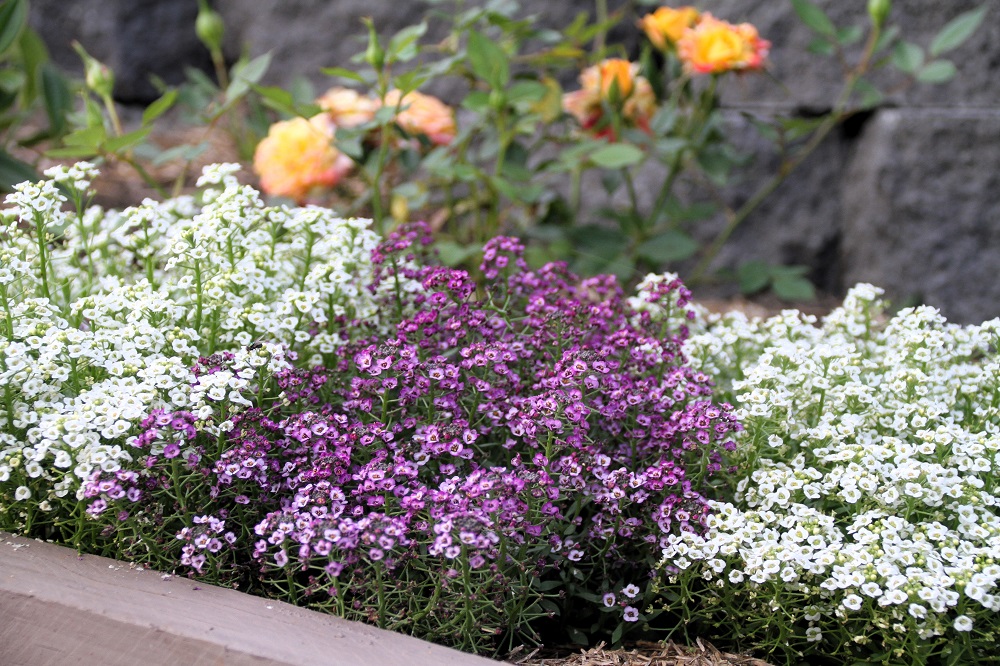
The Brachyscome Mauve Bliss, pictured above, is a pretty little native groundcover. I recently renovated a very large sloping garden at the front of my house, situated in full sun for most of the day. The five flowering plants featured today are all growing happily in that particular garden, even thriving in the plus-thirty degree temperature we had recently, for four days in a row. I will plant more Brachyscomes now I have discovered how easily they grow. Next time, I will buy some of the pink and white varieties.

I often order plants online from a nursery located a couple of hours north of here, which is also in a subtropical zone. The company specialises in tube stock plants, so usually, when first planted, I have tiny plants that can easily disappear into the background of mulch. When I first planted my tiny native Leptospermum Ballerina I could hardly see it until right up close. Yesterday afternoon, I took a few photos of the garden when the sun had almost set and the day had cooled. As I was heading to the seaside daisy, which is the next photo, I noticed my Leptospermum has a flower now! So this dainty little pink ballerina definitely had to be included today.

The description of Erigeron seaside daisy is that it spreads easily, has a weeping habit, and is a great groundcover for hot positions – perfect! The mass planting I did in October is already beginning to spread across the garden, which is now covered in tiny white native daisies.

This morning, I had my first sighting of one of this year’s baby magpies. When I took my camera out to grab a quick photo, I startled baby Maggs, who retreated into the seaside daisies. Two Australian natives together – it doesn’t get any better than that. 🙂

Although native to South America, the Cuphea is similar to the Australian Correa in both appearance and climate requirements. I found this beauty at a local plant nursery, and it hasn’t stopped flowering since it arrived in October. Apparently, frost can end the flowering season, but we rarely, if ever, have frosts. That will keep bees happy all year round. 🙂

The slope of the renovated garden, in some areas, has been formed into a rockery, where this ‘Flirtation Pink’ Diascia, a South African native plant, with its cute little pink flowers, seems to be happily growing. It hasn’t missed a beat with flowering since being planted in October. I have read that Diascias only need extra water during hot, dry spells, so the amount of rain we have had recently seems to agree with this new addition to my garden.
Thank you for hosting A Week of Flowers, Cathy. I took over a hundred photos around the garden yesterday afternoon, which is far less strenuous than gardening in hot, humid, summer conditions. 🙂

During the past year, I have been giving my garden a revamp. I have completely ripped out some garden beds and transplanted various plants that I decided I didn’t like growing where they were. I have no idea how much I have spent on new plants, but all the time and money spent has been worth it, especially when I am rewarded with beautiful flowers, especially roses.

During winter I ordered several bare-root roses and could have ordered more if I hadn’t restrained myself. I could justify limiting my new purchases though by reminding myself that after I see how big the rose bushes grow during summer, I can evaluate how much room I have left. There’s always next year, and the year after, and the one after that … to buy more.

Desdemona has company in the vase, of course, including this pale pink beauty. Another David Austin rose, a climber called Pierre de Ronsard was named in honour of the French Renaissance poet. I have two Pierre’s now, I purchased a second this year, and have them growing on both sides of a garden arbour.

Going back to the star of this week’s vase, according to the David Austin website, Desdemona was named after “the tragic heroine of Shakespeare’s Othello”. Austin roses are often named after literary figures, which appeals to me due to my love of literature. Desdemona grows to one metre in height, but I suspect she may grow taller in our fertile soil. We’ll have to wait and see, given she is a newcomer to my garden.

The buddleia I picked this flower from has been in my garden for a few years now. I planted a Gertrude Jekyll rose next to the buddleia, then wondered why my rose never flowered. A quick read gave me the answer, Gertrude does not like being overshadowed by other plants. I was prepared to sacrifice my buddleia so cut it back close to the ground.

Gertrude thrived and bloomed! And so has the buddleia, but a smaller version of its former self. I actually prefer the plant now it has regrown, as it looks healthier than before and I regularly cut off the spent blooms to keep it in shape.

Yet another new addition to my garden this year is Verbena ‘Polaris’, a drought-tolerant plant which thrives in the summer heat. The foliage of the plant is rather coarse, but I love the delicate flowers and thought they would look beautiful sharing a vase with Desdemona.

Right at the back of the vase are a couple of sprigs of New South Wales Christmas bush, which I added for an extra touch of greenery.

I enjoy the contrast of the other flowers added to the vase, but I suspect that when my Desdemona rose bush has grown more and has more flowers to pick, a whole vase full of her blooms would be an amazing sight to see. 🙂

The weather is still overcast here this week. We have had an occasional touch of sun breaking through the clouds, but the house continues to be rather dark and gloomy for this time of year. I took most of the photos close to a window, for extra light, but my vase this week will be displayed on the mantlepiece, in front of a large mirror.

The reflection in the mirror makes the flower display appear even bigger than it actually is. 🙂
My vase today is a contribution to In a Vase on Monday, hosted by Cathy at Rambling in the Garden. Thank you to Cathy. 🙂

The usual rain expected at this time of year has made an appearance during the last two or three weeks. In the subtropics, this is our wettest time of the year – it is also when the combination of the heat of summer approaching and regular rainfall creates high humidity.
And what annoying little insect loves the humidity? Mosquitoes!
My garden is fully responsible for my recent absence from blogging. Every day, I hear the collective murmurings of the leaves, the flowers, the trees, and of course, the weeds, beckoning me to join them. And why argue with them? It’s exactly where I want to be.
So now the summer rain is here – and the mosquitoes – I have been unwillingly forced indoors, several times, although I don’t mind staying outdoors if the rain isn’t too heavy.

From the windows inside my home, I have been admiring all of the plants I have been tending during the cooler months of winter now bursting into bloom. My roses are simply stunning, and clearly appreciate the extra care I have been giving them since completing my online university degree and abandoning my computer. I find that roses grow well in the subtropics. They are hardy plants, with the worst problems being aphids, which are easily removed by hand, and sometimes black spots on the leaves caused by too much rain. New leaves grow fast once the affected leaves have been removed.
Today, however, I am sharing what I believe is a stunning combination of flowers and colours when together in a vase – agapanthus, hydrangeas, and New South Wales Christmas bush.

The trio is a sentimental favourite of mine. Many moons ago when I lived in Sydney’s temperate climate zone, I grew all three in my garden, and with the climate south of here being slightly cooler than where I now live, they were all blooming beautifully at Christmas time. So every year on Christmas Eve, I would bring cuttings and flowers of all the plants indoors, enough to fill several large vases, to decorate the house for Christmas.
Here in the subtropics, the hydrangeas are in flower for many months. By Christmas time, however, the agapanthus looks bedraggled and the red stars of the Christmas bush have faded. My lovely trio simply always arrives one month too early for me to decorate the house for Christmas with them here in the subtropics, so I have to enjoy their indoor display prior to Christmas.

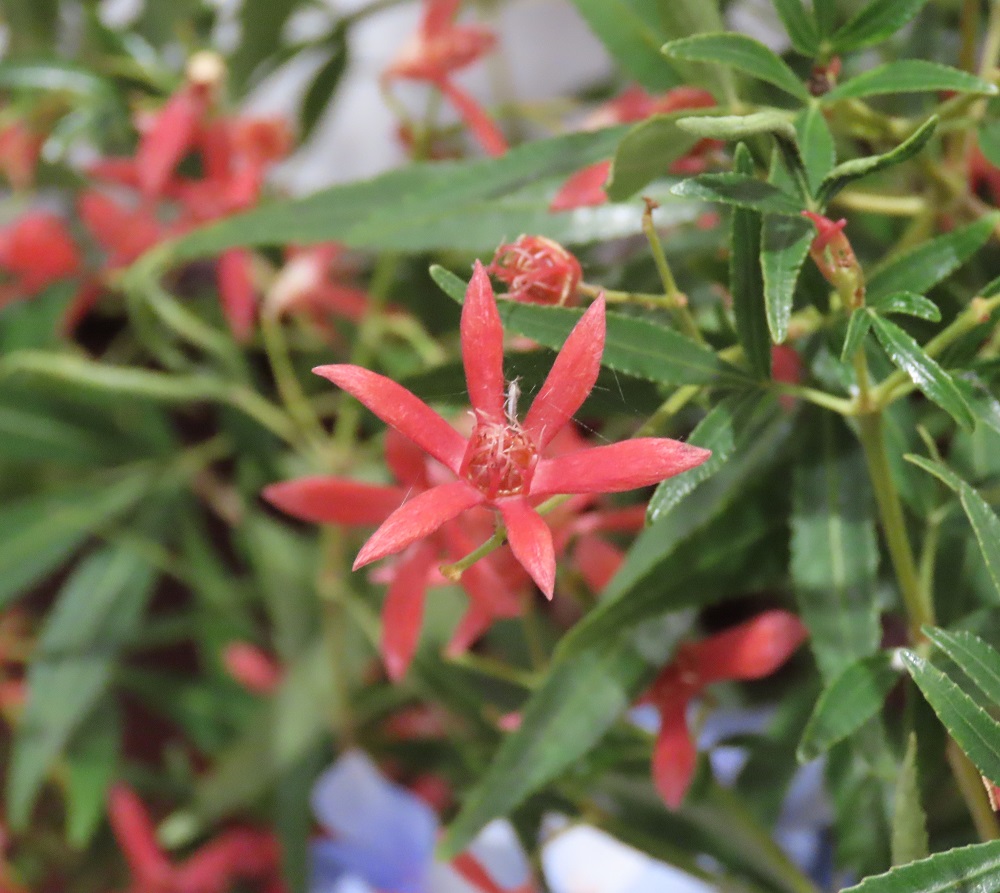
With being an Australian native plant, the New South Wales Christmas bush may be unfamiliar to people from other countries. New South Wales is the state where I live, so I must admit to having a soft spot for this beautiful small tree. In fact, during winter, I purchased a second tree. It has grown to around a metre tall since becoming a new resident in my garden and I expect its full height will be around four metres tall. I have taken the cuttings today from my older tree.
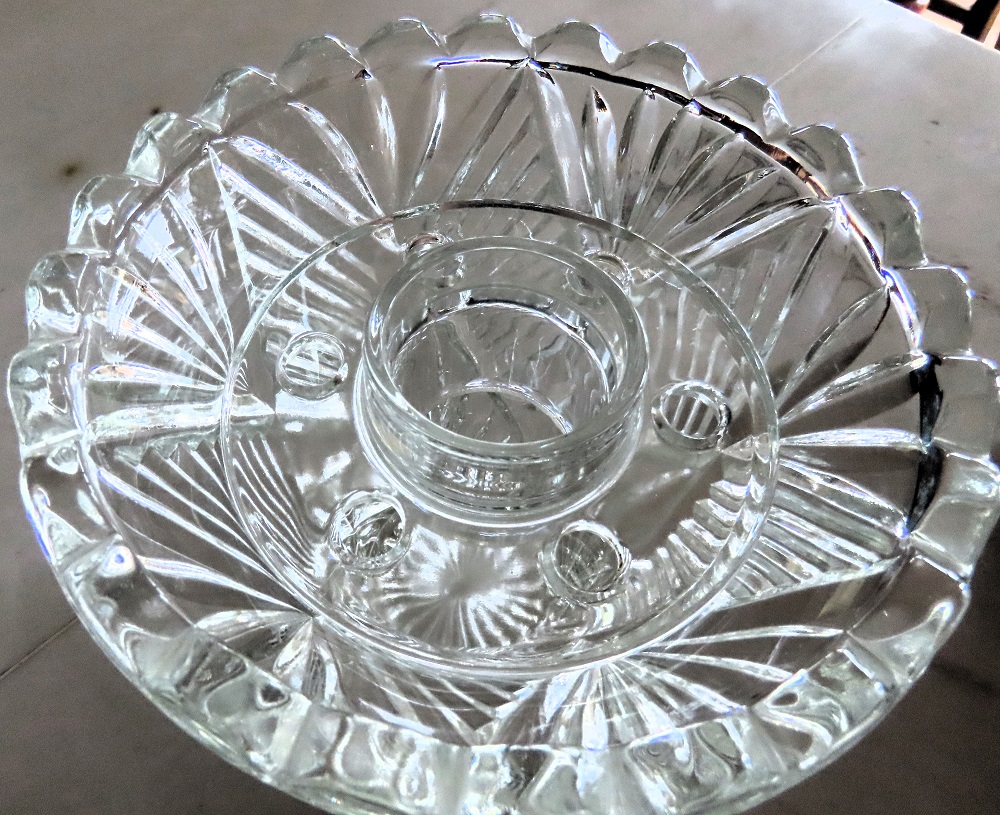
I chose my oldest crystal vase to arrange the display in an upright position. The centre of the vase can be removed, but I prefer to leave it in place when displaying tall flowers, such as the agapanthus, to give them stability. This vase is a particular favourite, inherited from my mother. It is about as old as me and a vase that I treasure.
Given the wet weather today, which is preventing me from spending the day outdoors, I decided to bring some of my garden indoors. And being Monday, it seems appropriate to add my early Christmas stunners as a contribution to “In a Vase on Monday”, hosted weekly by Cathy at Rambling in the Garden. Thank you, Cathy, for the inspiration to share some of my garden, indoors, on a wet, almost summer’s day. 🙂

Female Figbird
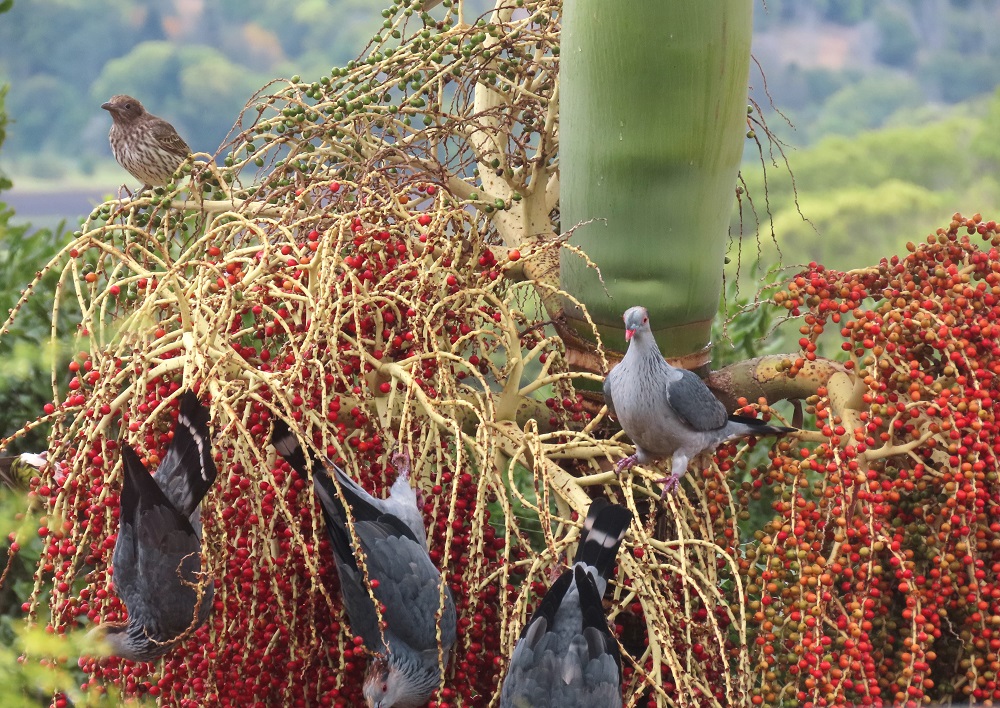
Female Figbird with Topknot Pigeons
 In My World