Australia · birds · garden flowers · in my garden · Mount Warning · photography · sugar cane · Tweed Valley · winter

Around the garden

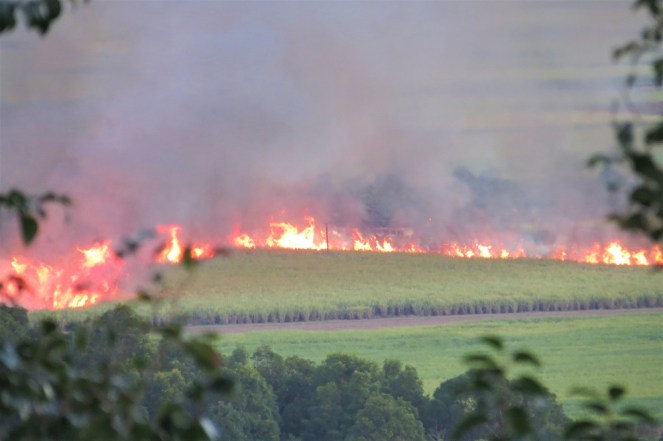
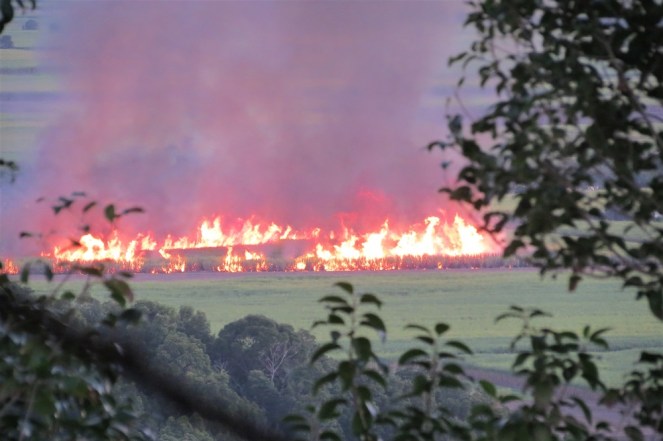
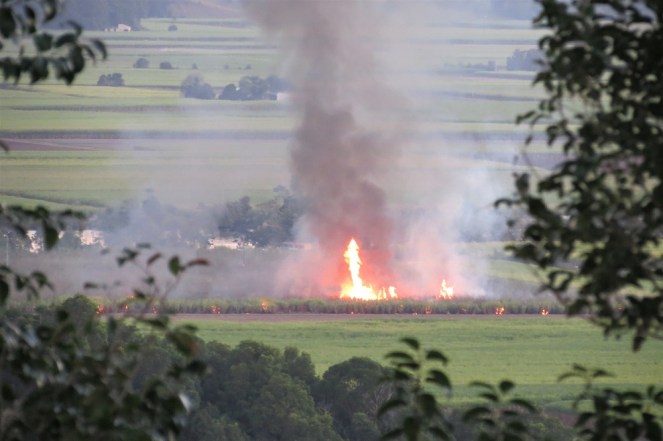
The hazy valley today, rather than being caused by nearby bush fires or dust-storms, was the result of a few good ole sugar cane fires. They seemed to be burning in all directions and filled the valley with smoke.
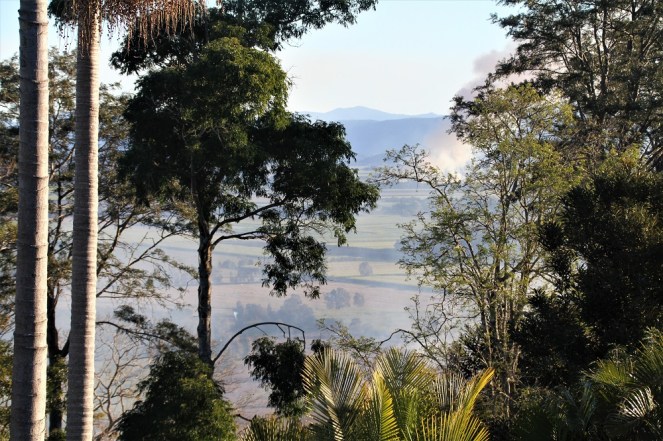
The thick tuft of smoke toward the top-right in the photo above is near the sugar mill. Which reminds me, I must take a drive down there and take a few close-ups one day.
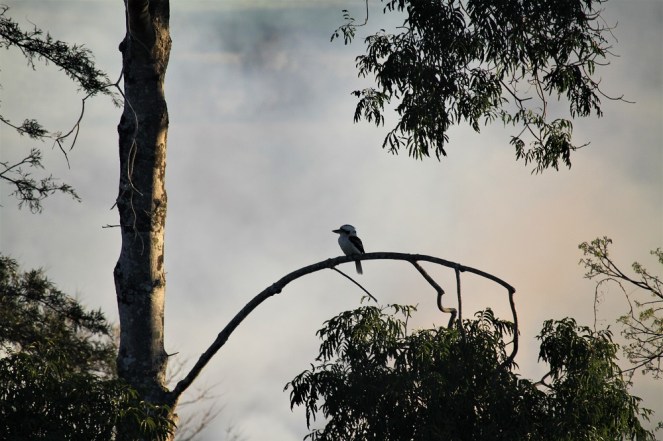
Usually when I take photos of kookaburras sitting on this branch, the green cane fields form a backdrop for the photo. Today, it was just smoke. The kookaburra didn’t seem to mind though.

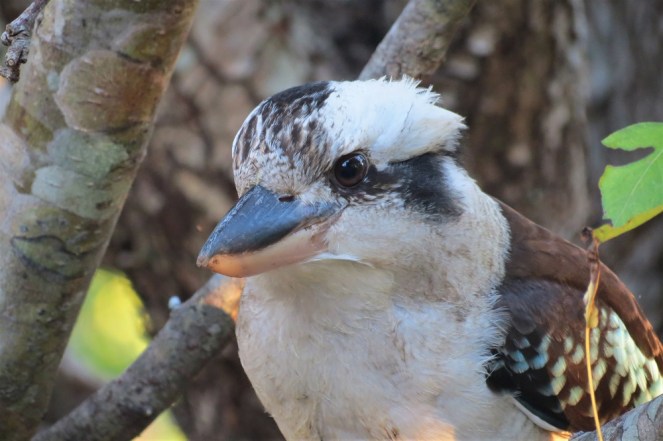
Earlier today I had a visit from Larry and Shilo, my two regular kookaburras who have been visiting for years. This is Shilo, hinting that it’s time for breakfast, I imagine, because she didn’t leave until after I had fed her and Larry.

We had other visitors for breakfast this morning too. Six sulphur-crested cockatoos landed in the palm trees near to the house and watched as I fed Larry and Shilo. They must have decided that minced meat wasn’t to their liking though, and soon flew down to the pecan tree. I didn’t realise there were any nuts left on the branches, but those observant cockatoos knew they were there.

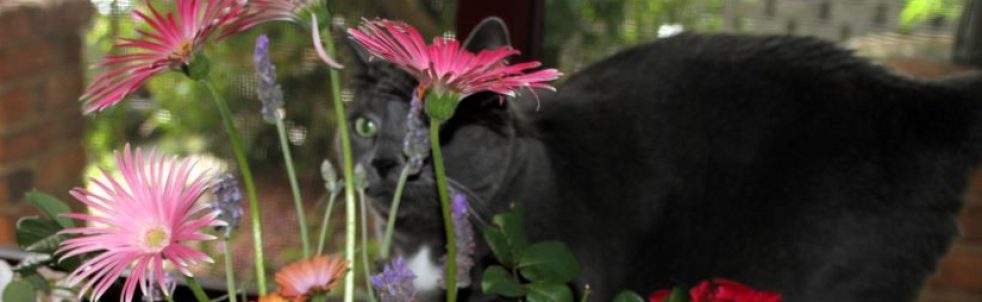
I’m pretty excited about this rose bush. I transplanted it during the colder part of winter – although it is still pretty cool even now – and it has several buds on the bush. This is the second bud to open and I love the velvet texture of the petals. I felt I could be taking a chance transplanting three rose bushes that had lived in the same position for about ten years, but now I’m so glad I did. All three look much healthier than they ever have before, and being closer to the house now I can admire them more often.

One of the most photogenic flowers in my garden each year is the grevillea. The whole tree is covered in buds and blooms, and the native honey eating birds are loving it!

I’m working on a uni assignment again, so I don’t know how much time I’ll have for blogging and taking photos this week. At the very least, I’ll take one each day of Mount Warning. 🙂

Australia · clouds · colours · Mount Warning · photography · rivers · sugar cane · Tweed Valley · winter

Grey on Grey

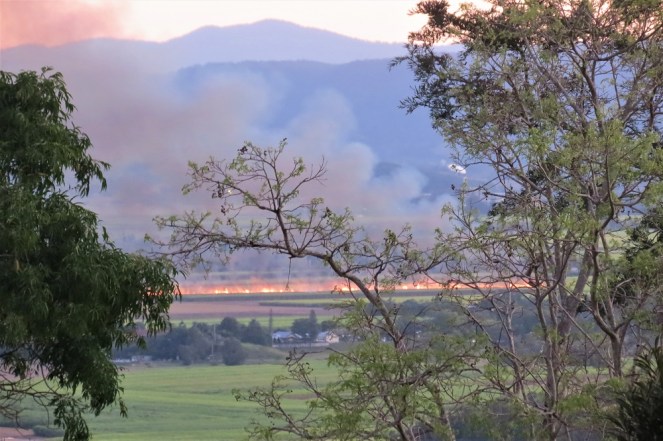
After the vivid blue-ness of the sky, clouds and Mount Warning yesterday, today’s contrast of grey on grey had to be noted.

I took this photo at sunset, when the sun’s rays illuminated the clouds ever so slightly, adding a touch of yellow for a bit of “oomph” to the grey tones.

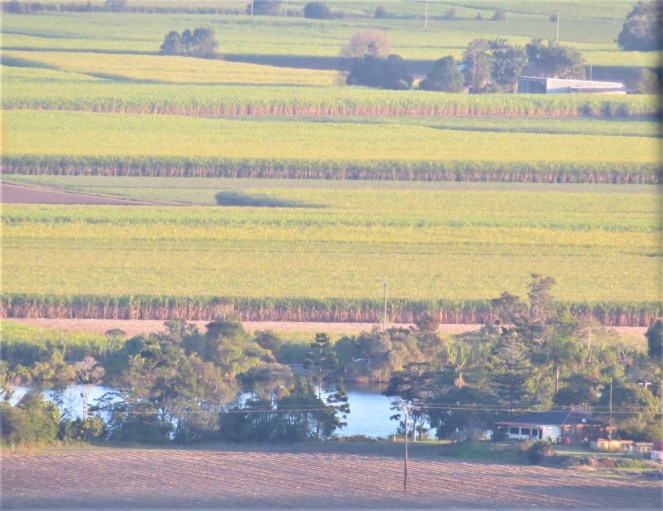
The second photo was taken with my camera on full zoom. The water is a section of the Tweed River, and growing beside the river – and beyond – is acre upon acre of sugar cane fields.

Australia · Changes · colours · Mount Warning · photography · sugar cane · Tweed Valley · winter

After the Rain – A Moody Mountain

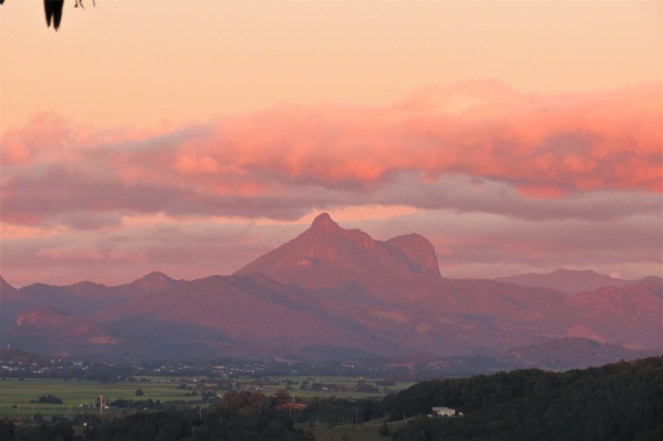
Between 6:30 and 6:50 am today I took several photos of Mount Warning. She’d been in hiding for most of the weekend, but this morning she emerged from behind the clouds, washed pristine-clean by the heavy rain we had during the weekend.

I could see the Condong Sugar Mill clearly this morning too, with bright green cane fields in the foreground and rolling hills behind.

As the morning sun hit the mountain the colours of the sky, clouds and the mountain changed.

And then the colours changed some more.

The mood of the mountain changed before my eyes as I watched, fascinated, clicking away with my camera.

Within the space of twenty minutes, the mountain put on a show which more than made up for her absence during the last few days of rain.


Australia · Mount Warning · native Australian birds · sugar cane · Tweed Valley

A Misty Morning … and a Sugar Cane Fire

The view to Mount Warning and across the Tweed Valley this morning looked incredible. A thick layer of mist had settled in the valley overnight, hiding from sight every object – both natural and constructed – that is usually visible on the valley floor. I took a series of misty morning photos which I will post here tomorrow.

Yesterday, my husband and I spent the day in our garden, right down the back of our yard among the fruit trees we planted several years ago. We’ve had a pretty hectic past eighteen months for one reason or another and have consequentially neglected our orchard area. And it shows. We have lost a couple of trees and have pruned back others harshly, hoping they will bounce back after some care and attention.

We were not alone in the garden though. As we were digging around our (very healthy!) pecan tree we noticed a kookaburra watching us from its perch in the pear tree.

You might notice the intensity of this gorgeous bird’s gaze! We knew what he was looking for – dinner – and it wasn’t long before he swooped down to catch a tasty morsel he had noticed in the soil.

At other times he seemed quite nonchalant, as if the potential of discovering a meal in our turned garden soil hadn’t crossed his mind!

After collecting dinner he flew back to the tree branch and dined alone, then shortly after he flew away.

Meanwhile, we heard the crackling sound of a sugar cane fire starting in the valley.

The fire was just a short distance away from our yard, but far enough away from the sudden drop at the end of our yard to be able to see the cane fire clearly. As the fire burned, I took a series of photos.

The outer perimeter of the cane field is clearly outlined, and as you can see the fire has been lit around the perimeter. The flames quickly gain momentum, burning the inner section of the field to remove leaf debris before harvesting can take place.

Within an incredibly short time, the fire is over. The job is done.

The time between the last two photos is just two minutes.

Just one minute later, the flames are virtually gone.

From the first dim sound we heard as the cane fire began, to the time the flames were gone, just ten minutes passed.

The sugar cane industry has played an integral role in the Tweed Valley for many generations. Newcomers to the area often cannot understand the attraction locals have to seeing cane fields ablaze every winter, but to the long-standing locals like myself, and to my husband – a fourth-generation Tweed local – the area simply would not be the same without the familiar orange glow in the valley each winter.