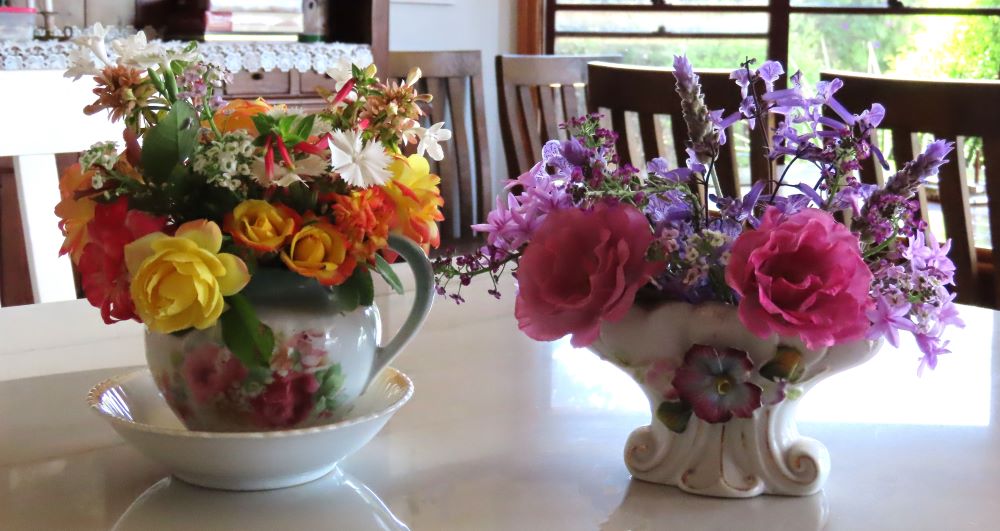
This morning, I had a plan. Having woken at 6:30am feeling much better than I did yesterday, I went straight outside, sprayed insect repellant on my arms and legs (does insect repellant exist in other countries, or is that an Australian thing?), and went out to pick some flowers for a vase for Cathy at Rambling in the Garden‘s weekly meme, In A Vase On Monday.
I beat those dratted mozzies – and the summer heat! Woo-hoo!
As usual, I dead-headed old flowers, pulled out any weeds I found, and collected an assortment of any pretty flowers I found. After breakfast, when I sorted through my collection, which awaited me in a plastic cup, I found I had enough flowers for two small vases. So I separated them by colour – yellows and mauves.
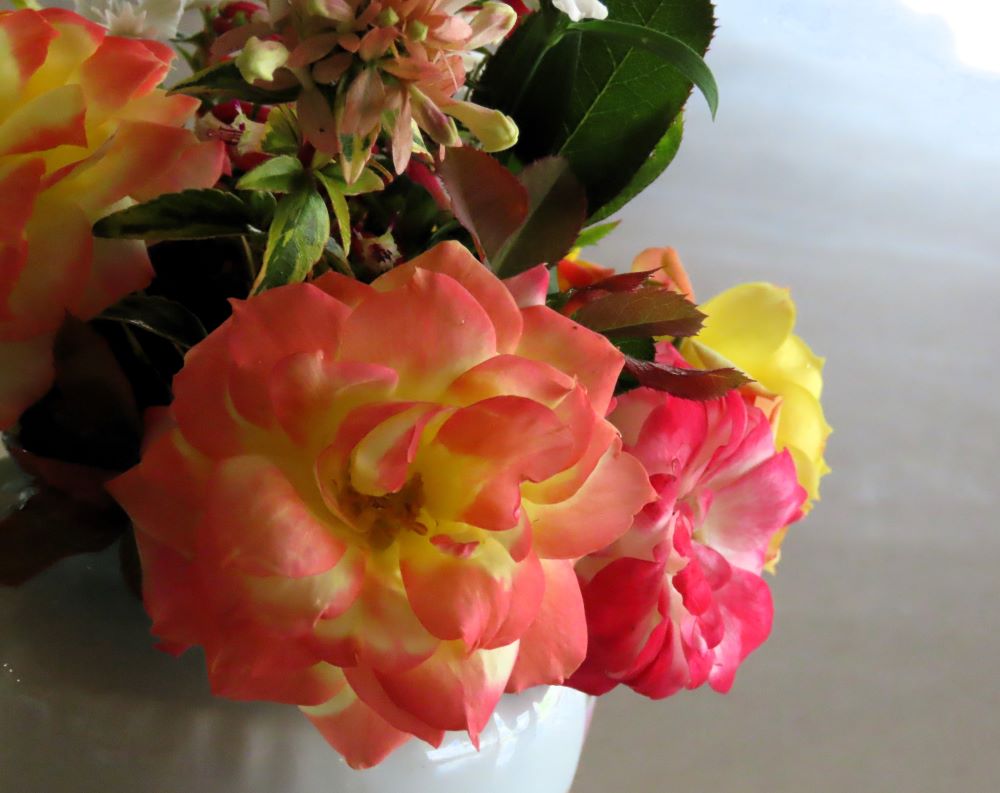
From the front windows of my house last week I had noticed plenty of colour on my miniature rose bushes. All three of these roses are from the same rose bush, aptly named ‘Chameleon”.
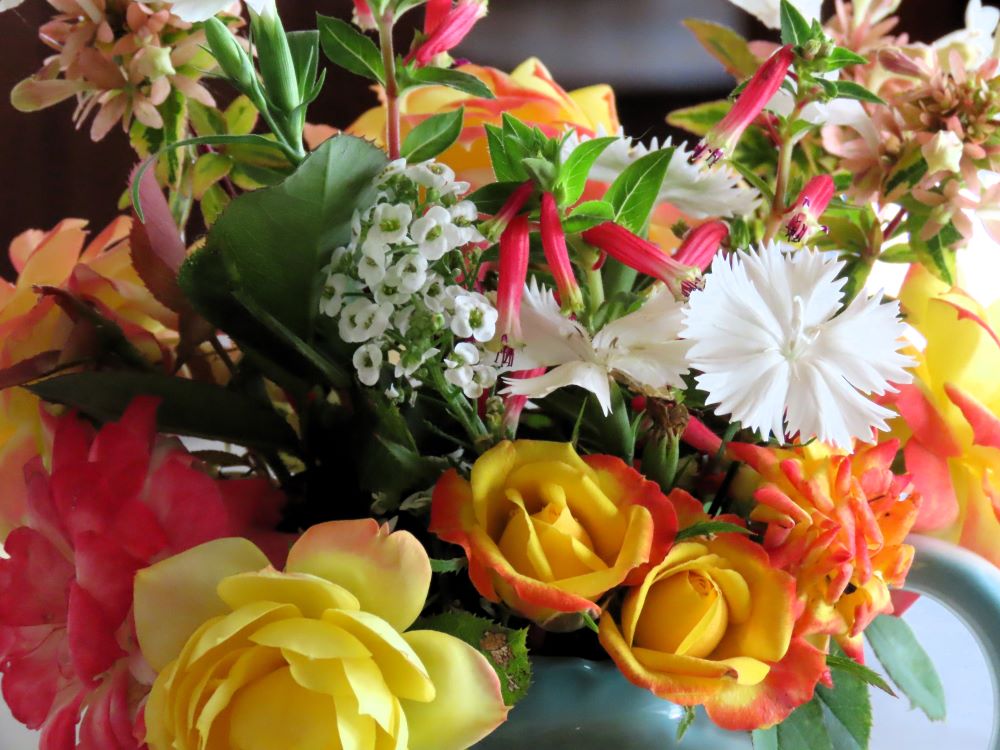
There are several different colours of Dianthus in bloom, but I only chose the white for this vase. Also, white alyssum adds a delicate touch and some greenery to the vase.
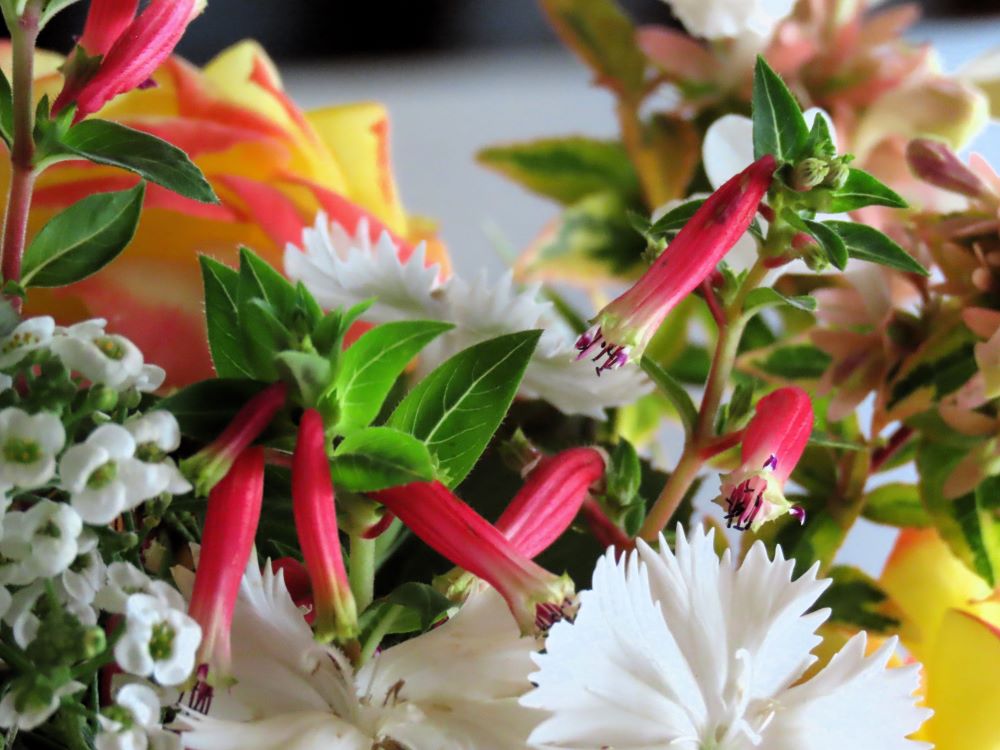
These tiny bell flowers, I believe, are called ‘Correa’, which is native to Australia. I know I have the name added to a photo from last year, somewhere, so I will edit the name if I am wrong. For now, I am going with Correa.
Update: Eliza noted in the comments that this plant is a Cuphea. I remembered where I had put the original label that came with the plant, and Eliza is spot on! This flower is in fact a Cuphea ‘Honeybells’. So thank you for the plant ID, Eliza. 🙂
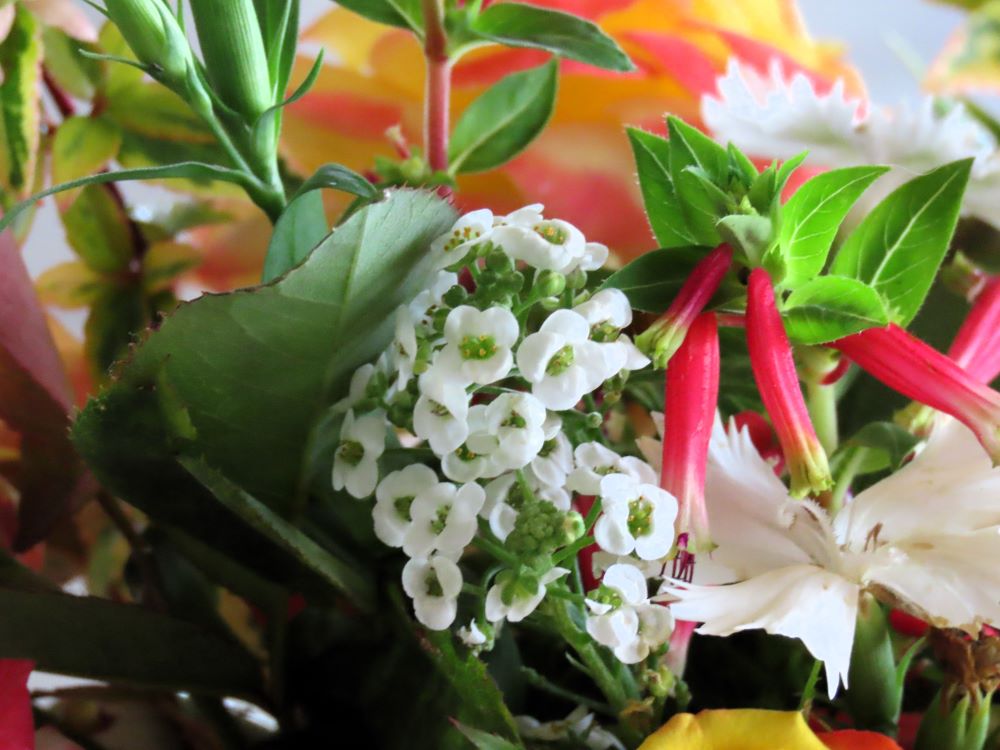
And here’s a closer shot of the alyssum, just because I love seeing the detail of their tiny flowers!
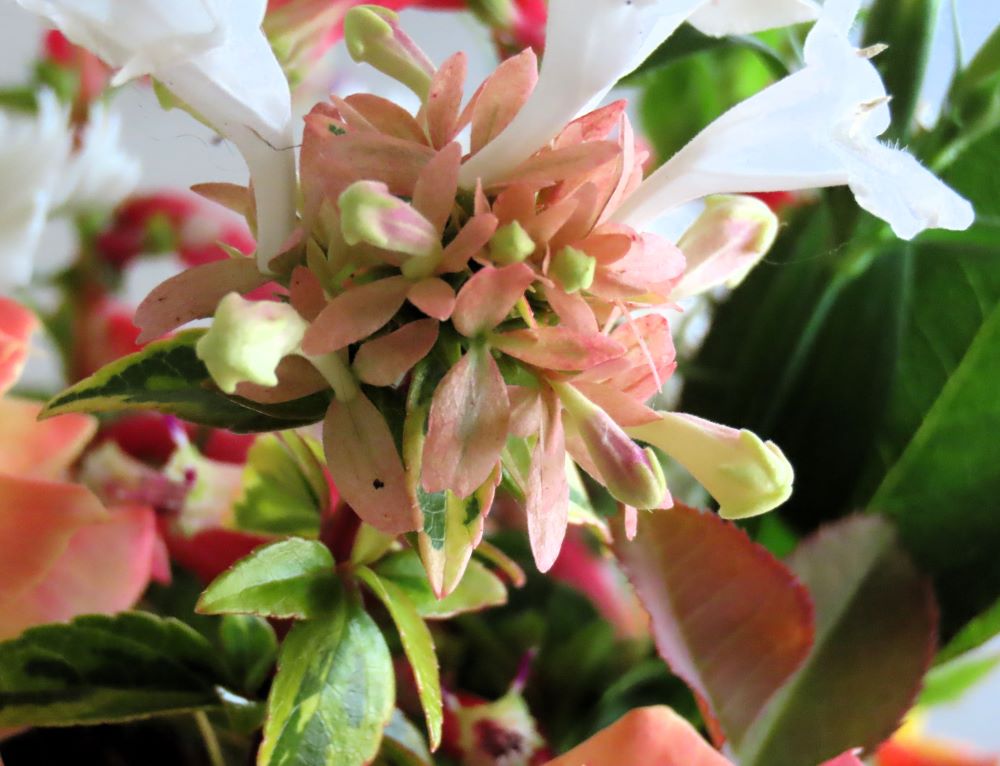
This flower was a surprise find this morning. It is an Abelia ‘Francis Mason’, a new plant to me, which is planted in the new rockery garden opposite the house. I didn’t notice it was flowering until I went up into the rockery to pull out a weed I had noticed, and there it was, looking very pretty. I love the variegated foliage on this plant, which is what attracted me to the plant when I bought it last year.

And here is where the yellow flower vase will sit this week. 🙂
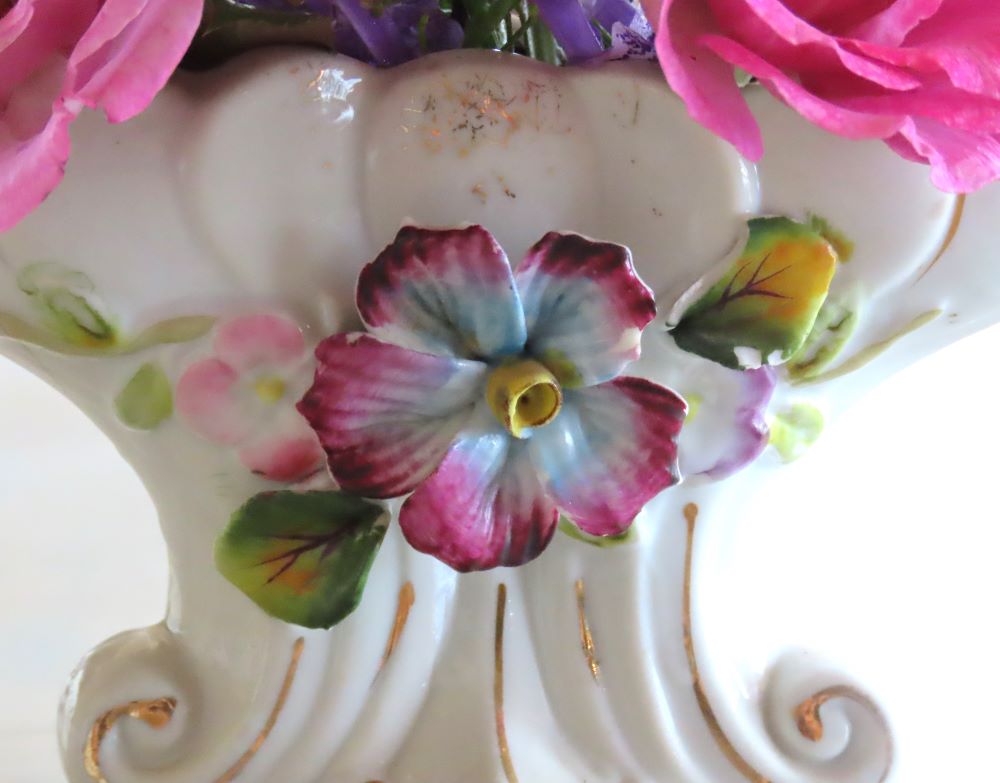
The mauve vase of flowers are arranged in a small vase that I had all but forgotten about until I saw it in my vase cupboard this morning, and it holds many treasured childhood memories. One of my sisters, who is thirteen years older than I am, loves gardening also. She may even be responsible for my early interest in gardening and flowers. When I was a child she would take me out into the garden to find flowers to bring indoors. We grew pansies, violets, fuchsias, snowdrops, poppies, all planted by Chris, who also cared for the garden when she lived at home. This vase is one we used to put some of our flowers into. There was an even smaller matching vase as well, but I think it must have been broken during one of my house moves in years gone by. As you can see, this vase has many imperfections, but it all adds to the character of the vase. For me, it’s the memories that count. ❤
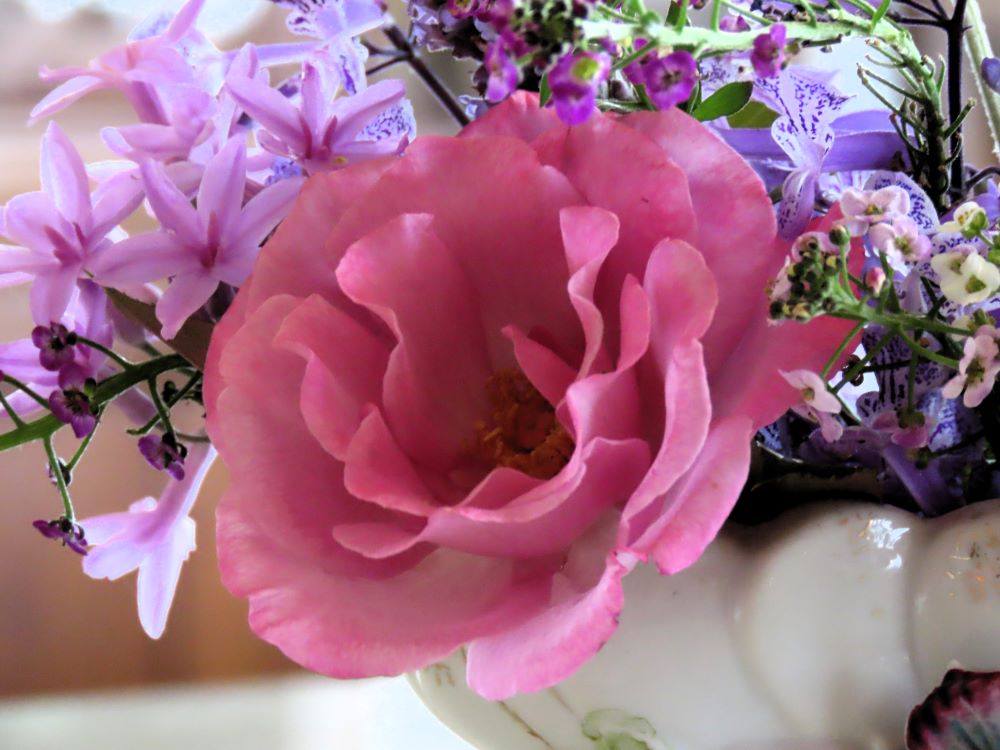
In this vase I have two blooms of a miniature rose called ‘Love Potion’. The colour is more pink-ish than mauve, but I am happy with the combination of the flowers.
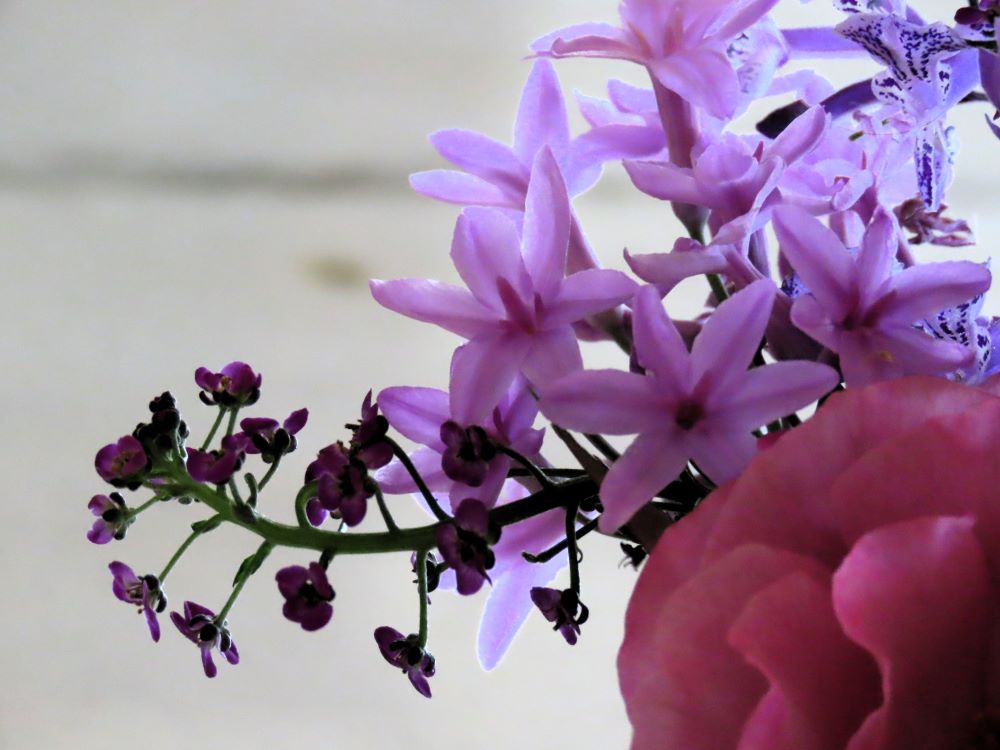
Beside a sprig of mauve coloured Alyssum is Society Garlic, which just keeps on flowering. Every week, I find more new blooms when I go to visit my roses. I have Society Garlic growing around most of my roses, as apparently the garlic odour is a deterrent to aphids.
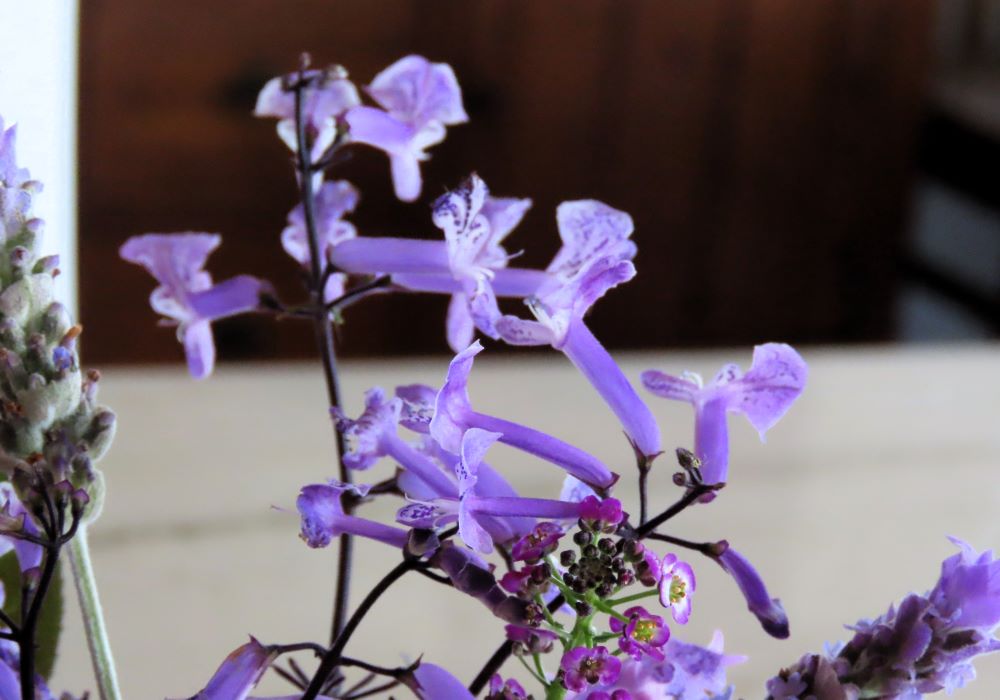
This mauve flower is called ‘Mona Lavender’. You will notice actual Lavender in the vase next to it, which is a completely different type of plant. The word Lavender simply relates to the colour of the flowers. This plants is from the Plectranthus genus and will only grow in shade, or dappled, morning sunlight. It grows very well under my purple Tibouchina tree, which is right outside my front door.

Looking at the vase from another angle shows the detailed pattern on the Mona Lavender flowers behind two shades of Alyssum, along with my two Love Potion roses.
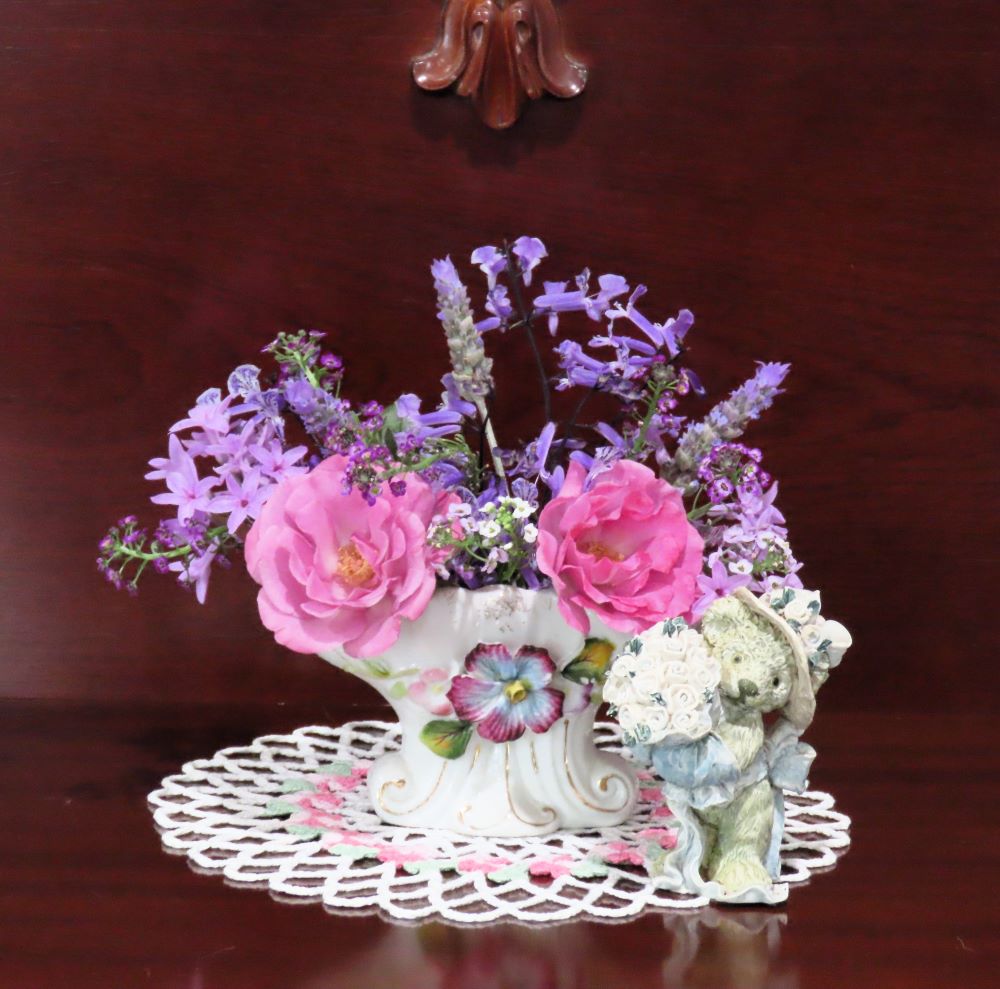
The flower adorned teddy ornament was a gift from my daughter when she was a child, and the pretty doily was made by my Mum, many years ago.
Now I am going to send my sister some photos of my mauve vase! She lives in Tasmania, many miles from where I live, so I don’t see her often. We often send each other gardening photos, so I am sure she will love to see my vase – and I hope she remembers it! ❤


 In My World