Australia · autumn · blessings · happiness · Tweed Valley

Towns of the Tweed ~ Hastings Point, (on the rocks)

The seagulls have to be cheeky, to get fed!

My photographic story of my visit to Hastings Point, a beautiful, sleepy, seaside town on the Tweed Coast began here yesterday, as I sat on the grassy hill overlooking the ocean and shared lunch with some very cheeky but rather cute seagulls!
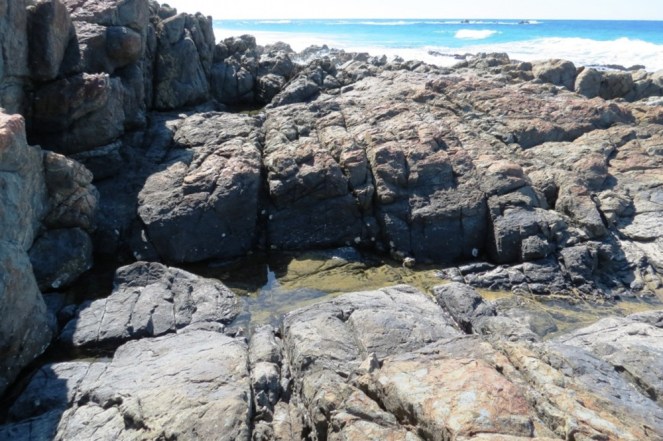
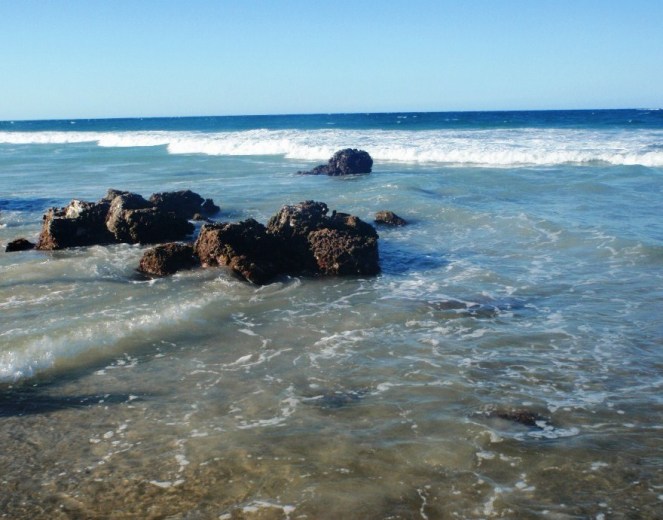
Tiny pools of the ocean water, trapped by the jagged rock formations.

We decided to return to Hastings Point the next morning, when the tide would be low and we could climb around the rocks below. I had also charged my camera battery, so could take more photos.

Black birds were flying around the rocks below, although didn’t seem to want to venture up the hill in search of food, unlike their seagull friends.

The roar of the waves, even at low tide, is at times almost deafening when you are right next to the ocean. The rocks which were hidden by the ocean the previous afternoon were now exposed, showing strange creatures attached to the rocks, and tiny shells in the rock pools.
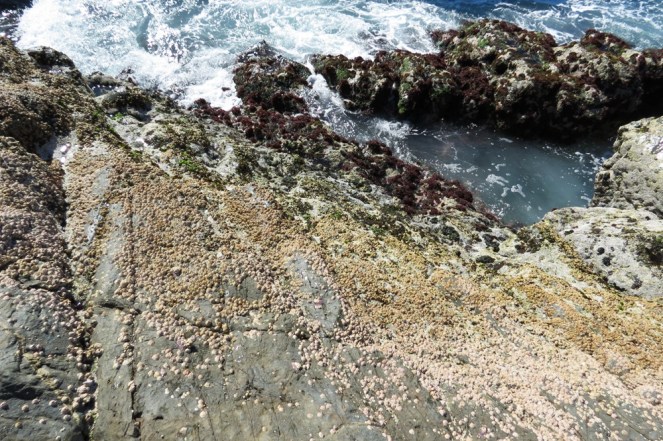
Tiny creatures, exposed by the low tide, and attached to the rocks. I needed to have a closer look at these…

I have no idea what kind of sea creatures (or rock inhabitants) these are, but they are rather interesting when you take a closer look…
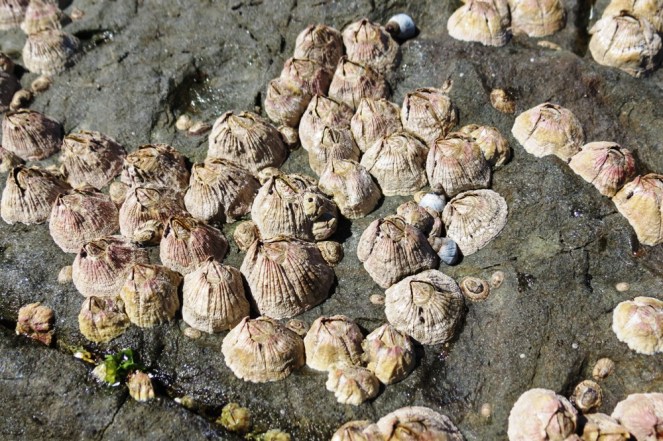
Looking down on the unidentified creatures….

Little seashells, dotted here and there among the attached creatures, look for all the world as if they are covered in honey, when you take a look at them side on.

Honey coated crustaceans?

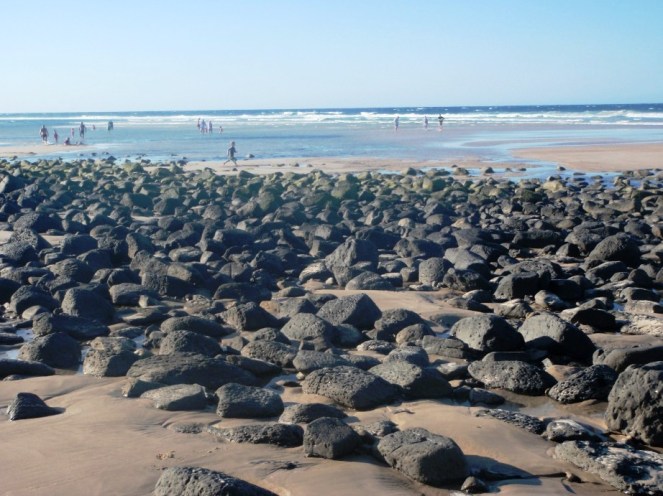
The crevices between the rocks, filled with ocean the day before, had dried out in the morning sun, making our climb across the rocks both dry and enjoyable.
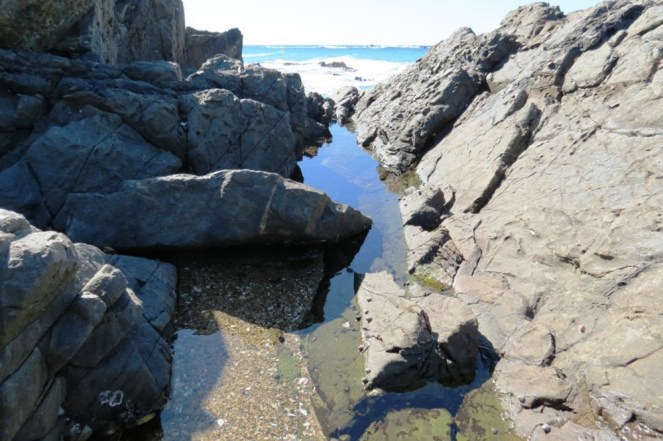
Wide expanses of rock, letting in streams of the ocean.

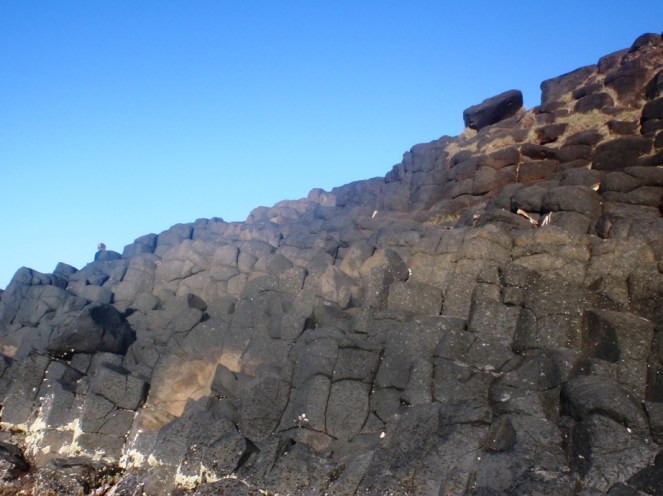
Although some of the rock surfaces were smooth and easy to get a footing on, other were jagged pillars of rock, like the volcanic rock formations at Fingal Head, just north of Hastings Point.

I suspect these may be the same breed of volcanic rocks, which can be seen at Fingal Beach.

Being the beautiful morning that it was, I was quite happy to just sit in the sunlight, mind clear, ears filled with the roar of the ocean….

The noise of the ocean didn’t detract from the peace I felt…

….looking out at the ocean, watching the waves crash against the rocks and weave their way like little rivers through the rocky crevices.

The tranquil but fierce ocean.

It felt as if I was existing in a world all of my own, with nature; the birds, the waves, the thundering and splashing, the peace and tranquility.

Natural beauty. No amount of money can buy this, it is free for all to enjoy.

The beauty….

After a while…I have no idea how long I sat on the rocks, contemplating the sea…I noticed the water levels getting higher, the wave splashes rising higher, and thought I might head around to the other side of the rocks, where another beach lies, looking south of Hastings Point.
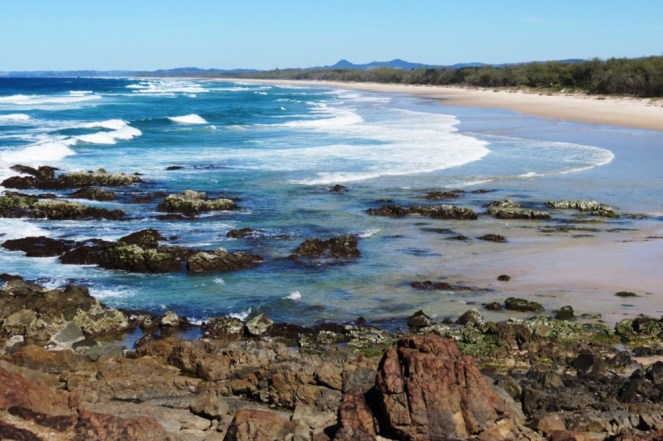
A deserted beach, looking south from the Hastings Point Headland.

A lone fisherman stood on the rocks, amid the noise and the spray of the waves…
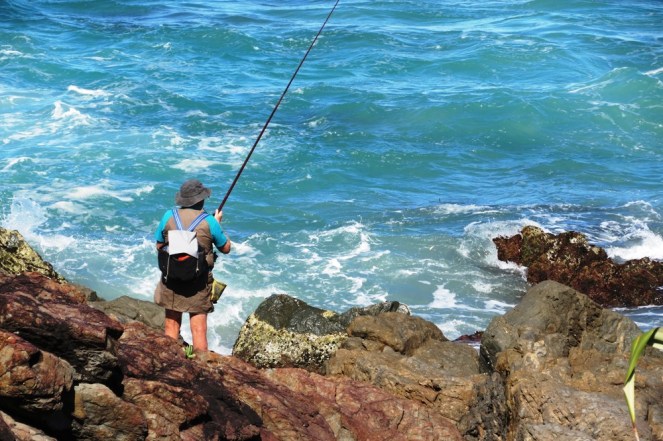
A lone fisherman….

I couldn’t help but wonder if he too felt the magic of the ocean, heard the peace in the crashing waves and lost all track of time as he stood on the rocks amid the salty sea.

The Old Man and the Sea.

Hastings Point is a place that brings back some old childhood memories, of my younger days spent camping with my mum and dad in our little tent by the sea, but now I have made new memories.

And my new memories fill my heart and make my soul sing!

I’ll be back to visit Hastings Point, many more times….

Beauty and colour in the sand.


Australia · autumn · dad · Mum · photography · Tweed Valley

Towns of the Tweed ~ Hastings Point

Hastings Point Headland

Hastings Point is a sleepy little village situated on the Tweed Coast Road, just south of Tweed Heads. I first visited Hastings Point as a small child, back in the days when mum, dad and I would leave our home in the Blue Mountains, west of Sydney, for our annual camping trip, and head north.

The waves roared and crashed against the rocks.

Those were the days when I would listen to my parents as they talked about the day they dreamed of, when they could move north, to enjoy the warmer climate and a more relaxed lifestyle. They did eventually pack up our lives in the Blue Mountains in 1971, selling everything, to live the rest of their days in their dream world. (I have written the story of our move north, and if you are interested in knowing how the Sea Change came about, it can be read here.)

A few of the locals.

Isn’t it funny how you see things through two different sets of eyes, one when you are a child, another when you become an adult? The Hastings Point I see today is a far cry from the caravan park I recall from my childhood days!

Hastings Point has the most beautiful, breathtaking, rocky headland. To reach the rocks you must climb down from the grassy area above, but my photos begin as we were sitting on the grass, eating fish and chips for lunch, and sharing our food with the ever-so-hungry seagulls!

Looking for an easy lunch offering.

There were other people there that day, eating lunch on the grassy hill overlooking the ocean, but before long nearly every seagull had invited themselves to dine with us!

A seagull giving his interpretation of a hovercraft!

Not only did they walk up and stand right beside where we were sitting, some tame little guys decided that if they put on a show and performed like a little hovercraft in front of us, perhaps they stood a better chance of scoring some chips! And it worked… 🙂

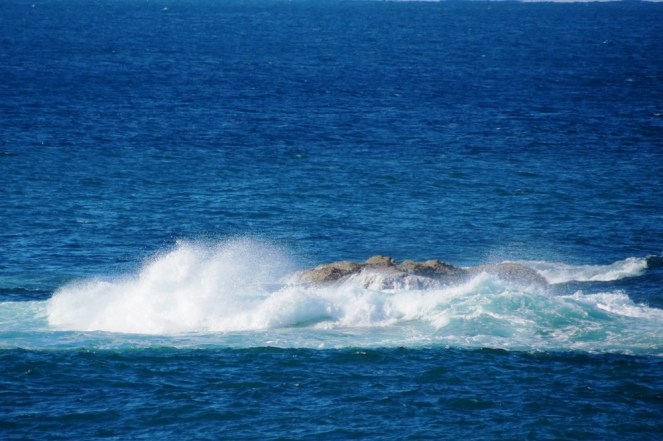
The waves below crashed against the millions of rocks, sending sheets of white spray high into the air. The power of the ocean in itself can take my breath away!

Where are the people?

I spotted a small boat out to sea, which looked rather…well…empty! I zoomed in on it with my camera, and sure enough, there wasn’t a single soul on board. Perhaps the tiny boat was anchored, whilst the occupants headed overboard for a spot of scuba diving.

As the tide was quite high, the natural rock pools were filled with water and we could see the sun gleaming on the shallow water captured within the rocky surrounds.

Shallow water captured in the rock pools.

After lunch (ours, and the seagulls!) we decided to climb down the rocky embankment. There was so much more to see, and with the hill not being too high, it would be an easy decline down the hill. Beside which, I was wearing sensible shoes!

To the south of the point, Byron Bay, the most easterly point of Australia is visible.

The rocks at close range were amazing! The shells, the creatures, the colours, the salty air, the waves, the roaring sounds of the ocean…it was all so magical!

The next day we would go back, to explore the rocky areas below.

But…low tide would be early the next morning, and besides which, my camera battery had gone flat!

Low growing, flowering plants, thriving in the sandy ground.

The next day, we returned….more photos tomorrow. 🙂

I was surprised to discover such pretty plants growing at the beach.
Australia · autumn · Tweed Valley

Towns of the Tweed ~ Over the Bridge in Tweed Heads.

“If only we lost our minds and arrived at our hearts.” ~ Robert James Waller.

My interest in photography is opening up a whole new world to me. There is such great enjoyment in losing my mind and following my heart, during the pursuit of capturing another image with my camera.

“One day I will go there, when I have the time” has been replaced by “I’ll go there right now!”. And so much for my old way of thinking, when I had imagined that stopping off somewhere, just for a few minutes, would throw my schedule out for the day. Since forgetting about my schedule, real or imaginary, I am finding that the days are not only becoming more enjoyable after my “photo-fix”, I’m actually achieving more overall, throughout each day!

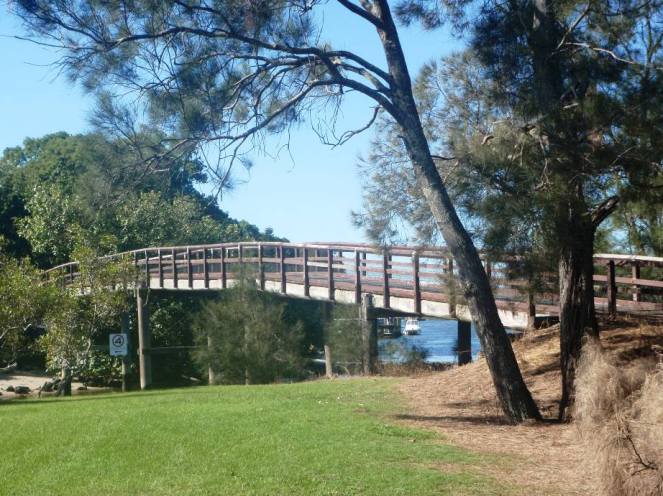
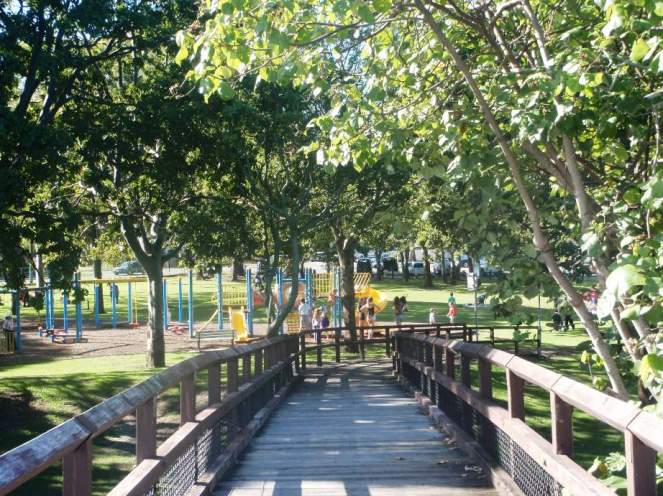
A walk across the bridge will lead to....

This gorgeous footbridge, part of a parkland area in Tweed Heads alongside the Tweed River, is a perfect example of ‘doing things, one day’. For so many years I have admired the bridge, as I have whizzed past in my car, never stopping, but intending to stop ‘one day’.

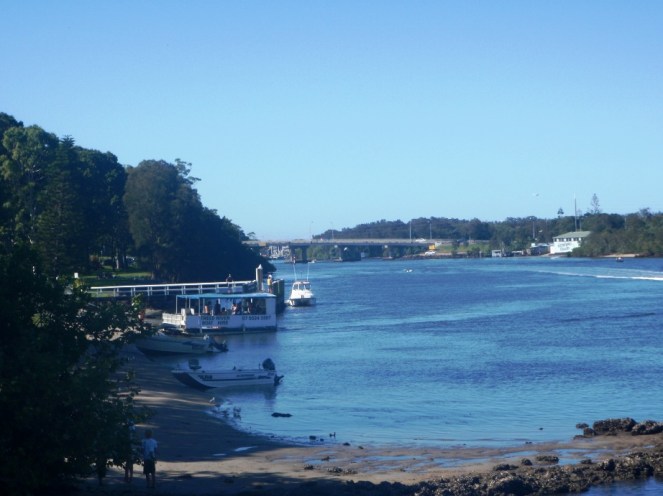
The Tweed River

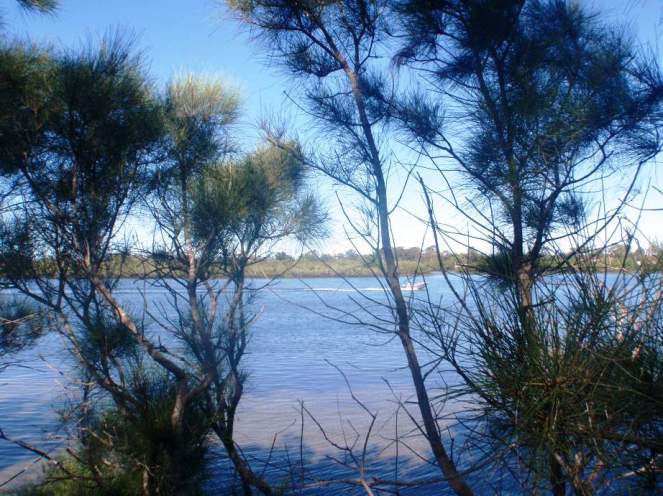
On a fine sunny day, just as we have enjoyed during these last couple of weeks, the river to the right of the bridge is simply beautiful….

The canals

….and to left, the river continues on into the man-made canals, which back on to an exclusive residential area.

The first thing you see is the playground...

Heading over to the other side of the river, the first thing you see is the children’s playground. I’m sure that the only time I have ever seen this play area empty is at night, and during a storm!

....and all the activity!

Beside the park is a boat ramp, which can always be seen being used, either by private or day-tripper boats. The bridge in the distance is the main traffic bridge over the Tweed River, which leads into Tweed Heads.

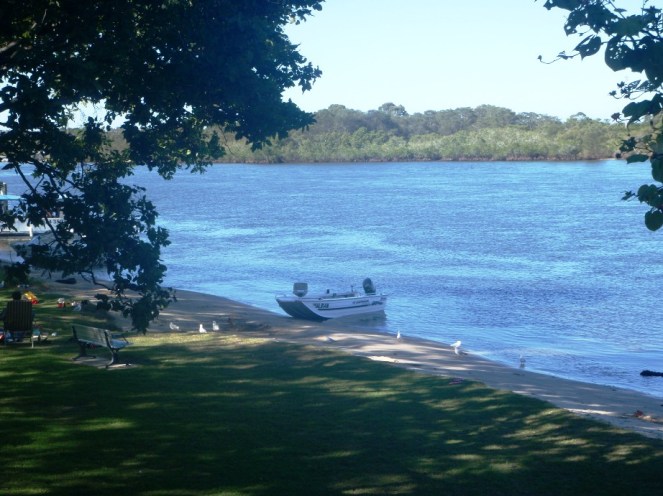
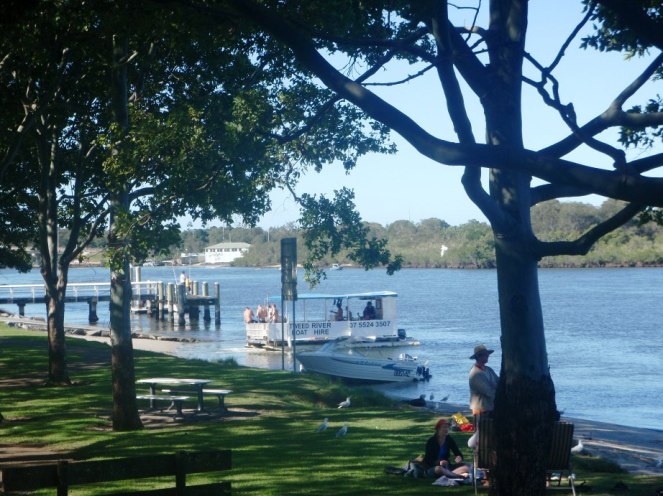
Shade for all, including the seagulls.

The park is full of huge old trees, providing an endless amount of shade. Just across the road from the park is a fabulous fish and chip shop, which I must admit we don’t go to often, as the wait is so long! But they have previously been voted the best fish and chip shop in the Tweed area.

Fishing off the pier.

It’s also a popular fishing spot, where my son and his mates have often spent hours fishing, during their school holidays. (Well, most of the time trying to catch fish, but they don’t mind if they go home empty-handed, which they often do!)

Under the bridge...

When you go under the bridge, there’s even more to be seen, especially if you know what you’re looking for, which I don’t! Luckily for me, my husband does….

....there's more to be seen!

….in among the mangroves, where fresh oysters grow. My husband tells me that mangroves such as these are crucial to the ecology of the Tweed River.

Looking down at the mangroves.

As we head back over the bridge and back to the car, we look down again towards the water. My husband is enthralled by the oysters….

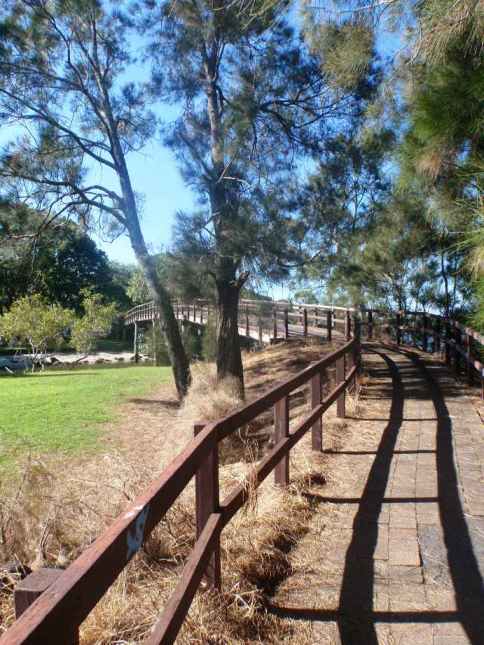
….I see our shadows, and another moment to freeze for all time with my camera. 🙂
Australia · autumn · Mount Warning · Tweed Valley

Towns of the Tweed ~ Fingal Head (Part 2) A Volcanic Rock Headland

In May 1770, when Captain James Cook sailed along the eastern coast of Australia, he originally named what is today known as Fingal Head, Point Danger. Today, Point Danger is located just five kilometres north of Fingal Head. Since the mistake of locations was made so many years ago, the two place names have become established in the area, and are not about to be changed, even to keep Captain Cook happy!

Cook Island from Fingal Beach

Regardless, both Point Danger and Fingal Head are points of immense natural beauty in the area and both also share the need for a lighthouse, due to the dangerous offshore reefs.

Heading along the beach to the wall of volcanic rocks.

When my husband and I spent a leisurely Sunday afternoon at Fingal Beach recently, the dangerous reefs and pounding waves were the least of our concerns. We took a long walk along the sandy beach, dodging the volcanic rocks, as my ex-surfer and fourth generation Tweed Valley husband educated me on the history of the beach, pre-Cook days.

Volcanic rocks, untouched, after so many years.

About twenty-million years ago Mount Warning, (you will remember Mount Warning, surely, from the umpteen times I have made mention here of this Magical Mountain) a now-extinct volcano, spat out basalt lava, now hardened into rocks, which to this day adorn the shores of Fingal Beach.

There's plenty of beach beyond the rocks.

Surely these rocks haven’t remained here, on this same beach, for twenty-million years, untouched, I wondered? Apparently, yes, they have. The basalt lava from Mount Warning solidified and over the years has transformed into the rock formations we see today on the beach.

Basalt lava, cooled over 20 million years, and split into columns of rock.

As the lava cooled and contracted, in places it split into unusual columns of rocks, which resemble rock formations in Fingal, Ireland, hence Fingal Head was given its name.

The rocky cliffs which lead to the lighthouse.

We climbed over a narrow section of the rocks to reach a grassy, tree-lined track, which would take us up to the Fingal Lighthouse.

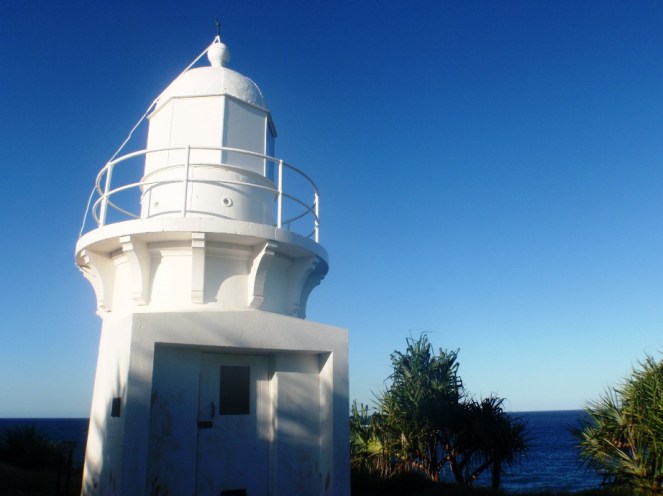
At the top of the embankment, Fingal Head Lighthouse was there to greet us.

After quite a considerable amount of time spent photographing and admiring Fingal Head Lighthouse, we ventured along the boardwalk tracks, not knowing for sure where they would lead to.

The boardwalk.

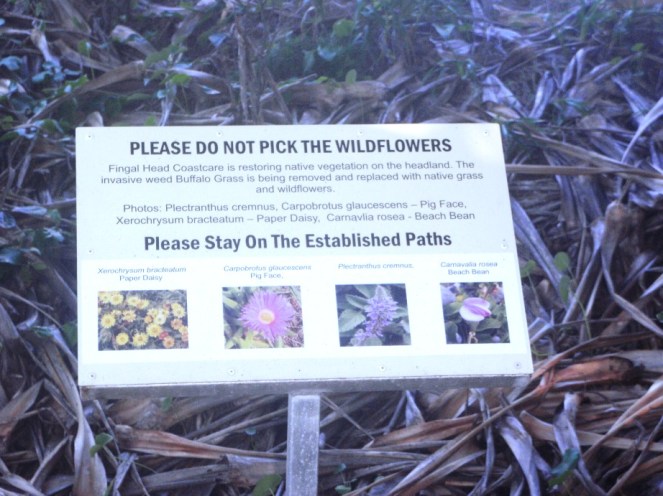
After surviving over twenty-million years subjected to the elements, it is good to know that the area is being taken care of, in an effort to retain the natural beauty of Fingal.

The conservation of the flora, fauna and history of Fingal is now in the hands of those who care.

There were a number of off-shoots along the path but we chose the path which would lead us back to the beach.

This pretty shell in the sand provided me with a new header for this page!

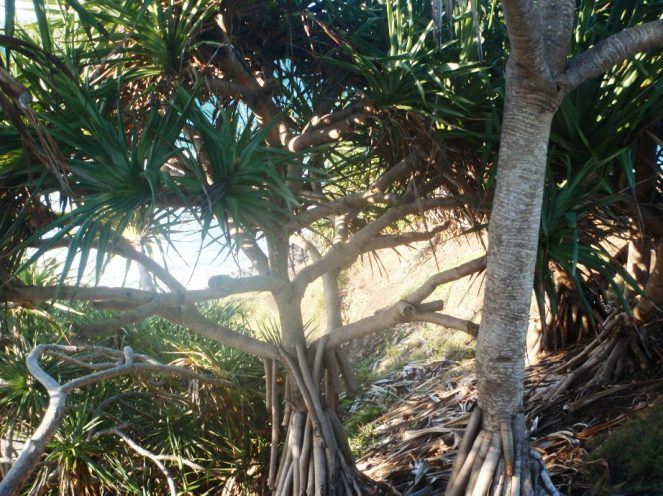
I’m not sure of the name of the trees around the beach, but look at the unusual roots in this next photo. I thought at first that the soil, or sand, had eroded from around the base of the trees, leaving the roots exposed, but my husband assures me that is the way these trees grow.

These trees were everywhere, along the beach and around the lighthouse.

As we headed back towards our car, I glanced back for one last look at the volcanic rocks along the beach, and noticed how long the shadows were getting as night-time approached.

Aren't we tall?

It really was a picture perfect day, with the brilliant blue skies are gentle breeze. Even as the sky darkened, everywhere I looked I found more and more beautiful images to photograph, as we bid our goodbyes to Fingal Beach.

Goodnight Fingal. 🙂
Australia · autumn · Mount Warning · old house · Tweed Valley

Towns of the Tweed ~ Fingal Head (Part 1) The Tiny Lighthouse Watching Over the Huge Ocean.

When my children were little people who loved having a bedtime story read to them each night, one of their favourite books was called “The Most Scary Ghost”. There was nothing particularly significant about  this story, other than said star of our story, the ghost, resided in an old lighthouse and would run up and down the one-hundred stairs each night shrieking, “I’m the most scary ghost, whippety-woo!

A view over the Pacific Ocean.

The big attraction to this book was definitely the lighthouse. There’s something rather romantic to the image of a lighthouse, even to a child; of being a lighthouse keeper, living in the lighthouse, and being responsible for the safety of countless ships and the lives of the crew, as they pass the rocky points of land the flashing lights are a warning of.

The lighthouse sits so peacefully, overlooking the ocean. I wanted to take photos from every angle possible.

One such lighthouse exists at Fingal Head, a lovely little seaside village just south of the New South Wales and Queensland borders.

The beacon flashes every five seconds and has a range out to sea of between 14 and 17 nautical miles.

This tiny lighthouse, situated twenty-four metres above sea-level, stands only seven metres in height, making it one of the smallest lighthouses in Australia. But height wasn’t an important factor when designing and building the lighthouse in 1878, due to the natural elevation of the site.

Once upon a time this lighthouse did have a keeper, in fact the first keeper, William Arnold, happily resided in the keeper’s residence with his wife and eleven children for twenty-seven years. What a view they enjoyed, with Cook Island just half a kilometre out to sea, and the endless blue waters of the Pacific Ocean, as far as the eye can see!

Cook Island, just half a kilometre from the headland.

These days, Fingal lighthouse has the honour of being the oldest public building in the Tweed Shire. It was converted to automatic operation in 1920 and with the keeper’s cottage having no further use, it was demolished.

Yesterday, when I visited Fingal Heads, the sky was the most brilliant of blues and a pod of dolphins frolicked playfully not far from the shore. I wonder if Captain James Cook was met by such a delightful day, back in 1770, when he sailed north along the eastern coast of New South Wales, sighting Fingal Head and Cook Island, and naming the local landmarks of Point Danger and Mount Warning?

Looking down the rocks just beyond the lighthouse we saw a group of fishermen.

If there were any ghosts present at Fingal lighthouse yesterday, they were no doubt basking in the glory of the day, watching the dolphins play in the ocean below and sighing with contentment at the sight of the multitudes of happy people, enjoying a day in the sun in the surrounds of the old lighthouse.

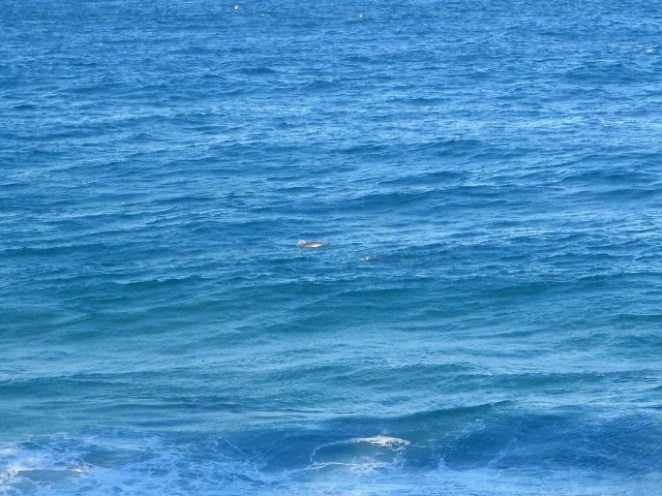
Look carefully in the centre of the photo, you will see some dolphins in the water.

And what became of the scary ghost in my children’s beloved childhood story? The child in the story yelled “BOO!” to the ghost, and it fled down the one-hundred stairs, never to be seen again. 🙂

One contented Fingal resident. 🙂